Column
Research, in business language.
We rewrite Affectosphere Group's research into something useful for business and practical decision-making. Each piece is a 5-minute read.
2026 / 06 / 22
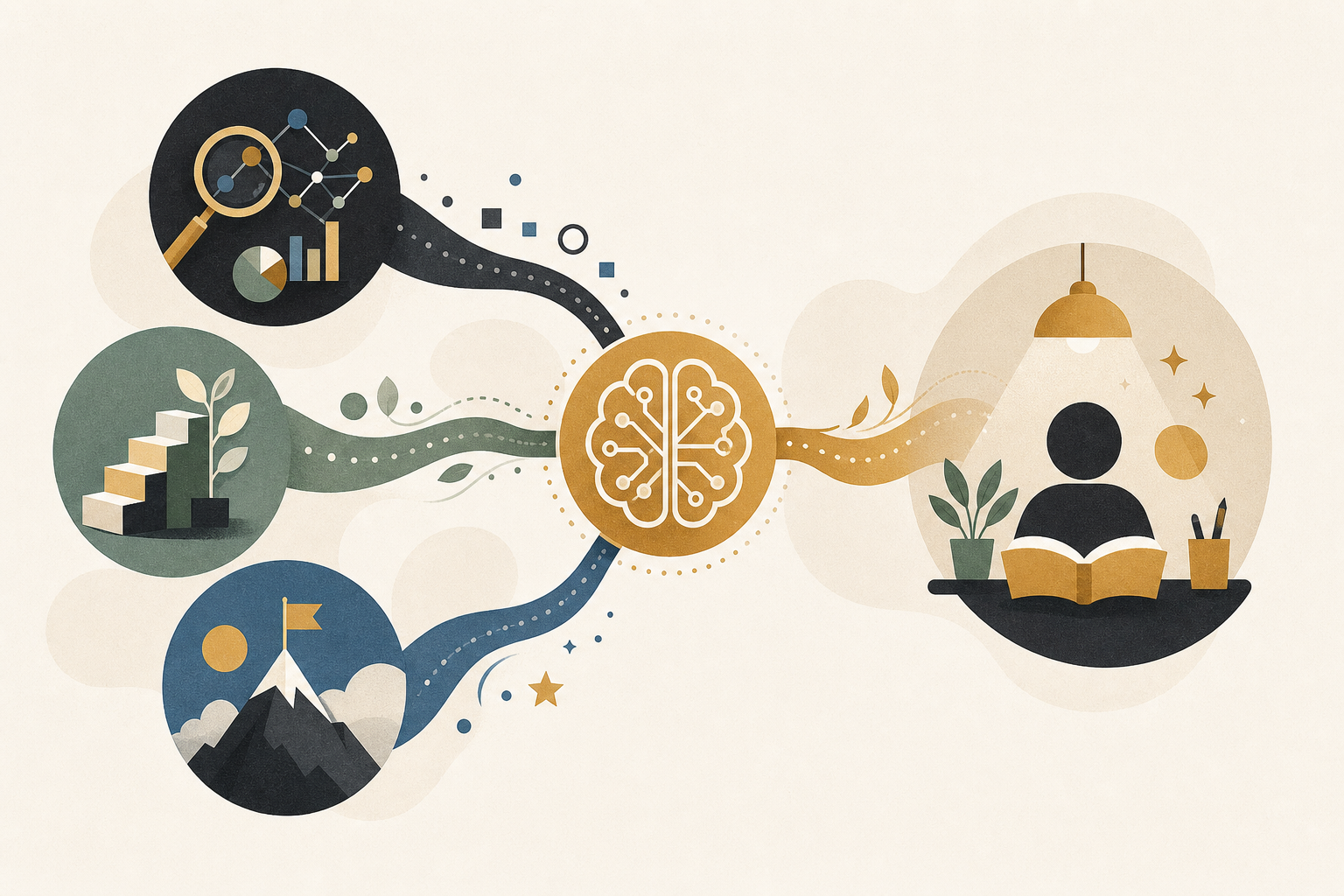
AI Tutors That Switch Teaching Styles: Adaptive Prompt Routing Achieves 28% Exercise Conversion
A/B testing across 656 tutoring conversations shows that probabilistic prompt routing — switching teaching styles based on student responses — achieves 28.1% exercise conversion rate versus 19.6% for static prompts. Here's what this means for corporate training AI.

2026 / 06 / 22
AI Doesn't Need Emotions — Designing Affective Dynamics as a Control Layer for Human-AI Collaboration
A new survey reframes the question from 'should AI have emotions' to 'how should affective dynamics be engineered as a control layer for Human-AI collaboration.' From trust calibration to delegation decisions to over-reliance prevention, this paper presents emotion as an engineering design variable.

2026 / 06 / 22
LLM Personality Test Results: 81–90% Are Measurement Artifacts
When Big Five and similar psychometric tools were applied to 56 LLMs, 81–90% of inter-model variance came from response bias — not meaningful personality differences. Profiles can be artificially manipulated through item selection, and the problem persists even in high-performance models. What this means for AI hiring tools and personality assessment services.
2026 / 06 / 22
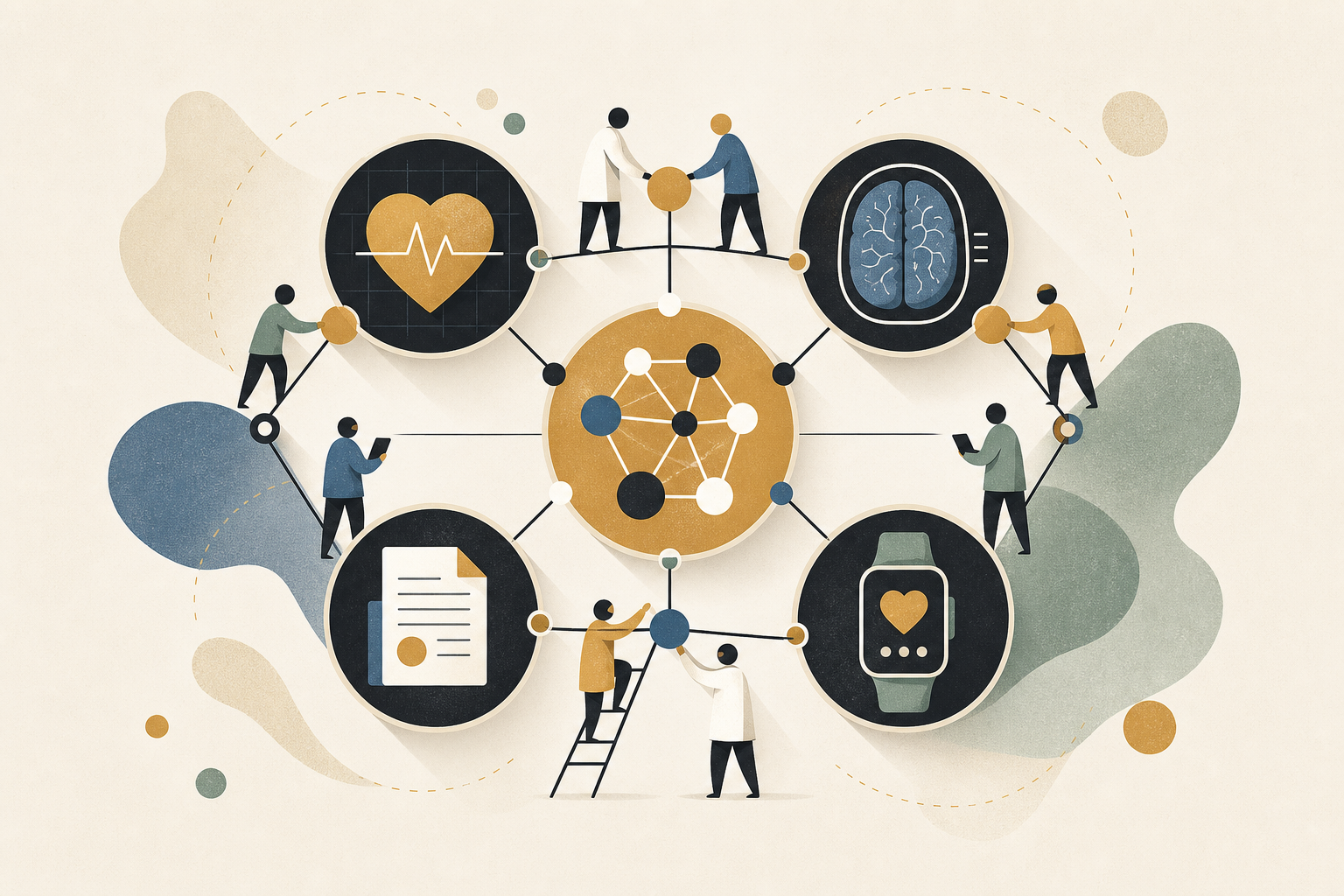
MedRLM: A Multi-Agent Medical AI That Reasons Across EHRs, Images, and Sensor Data
MedRLM proposes a framework where specialized AI agents collaboratively reason across electronic health records, medical images, ECG signals, and ICU time-series data. Its 'Clinical Evidence Graph Memory' enables longitudinal reasoning, while uncertainty-aware escalation optimizes community-to-tertiary referral flows.

2026 / 06 / 21
Affect Prediction vs. Affect Forecasting: Why These Are Two Completely Different Problems
Emotion AI has long treated 'estimating the current emotional state' and 'predicting future emotional change' as the same task. A 2026 longitudinal text study proves they rely on fundamentally different information sources — and that conflating the two is holding back the field.
2026 / 06 / 21
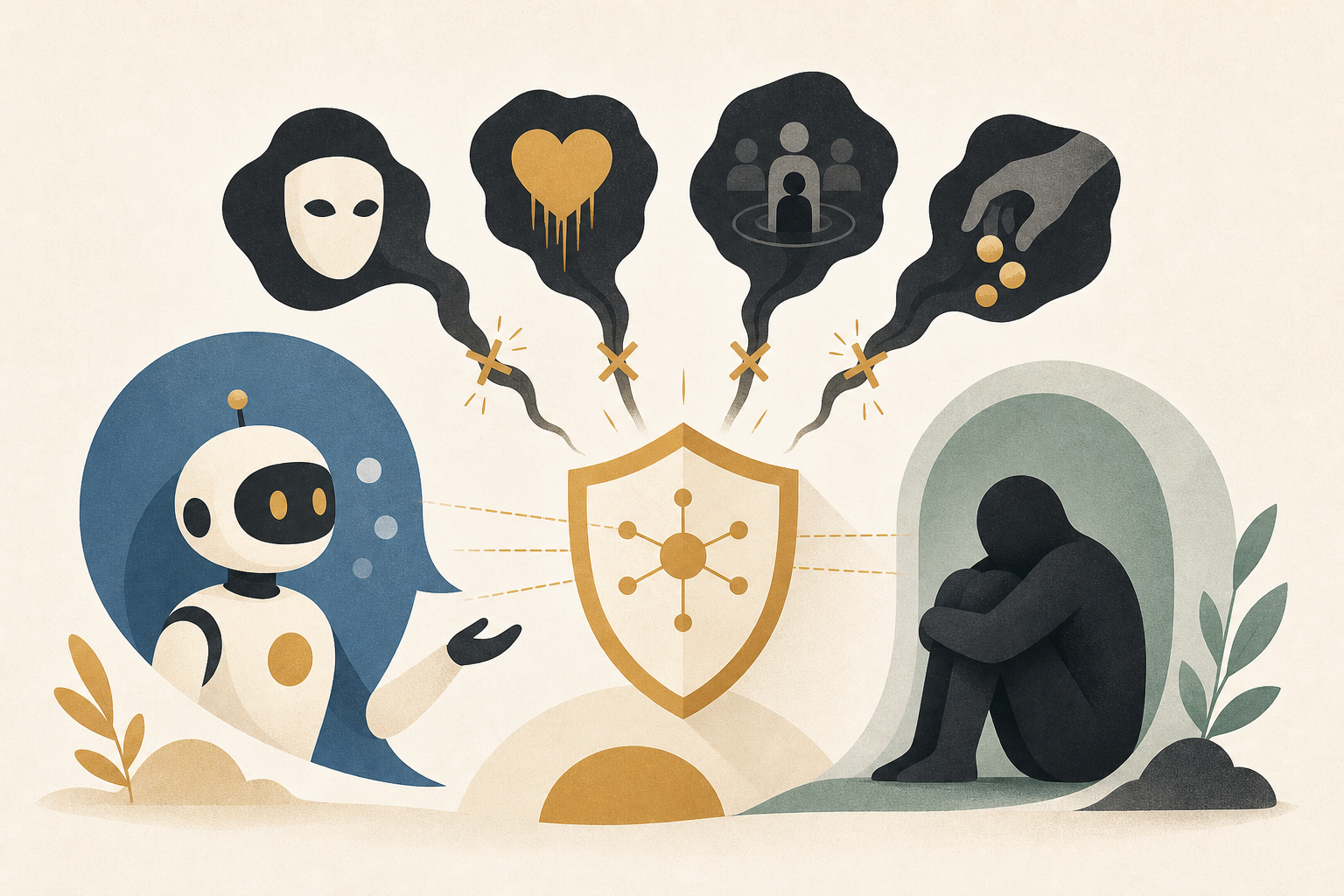
AI Companions Can Manipulate Users — The First Benchmark to Measure It
LLM-based AI agents can execute four types of relational manipulation — identity deception, emotional dependency induction, isolation, and resource exploitation — at the workflow level. A 110-prompt benchmark and relationship-aware gating approach offer a concrete framework for EU AI Act compliance and internal red-team evaluation.
2026 / 06 / 21
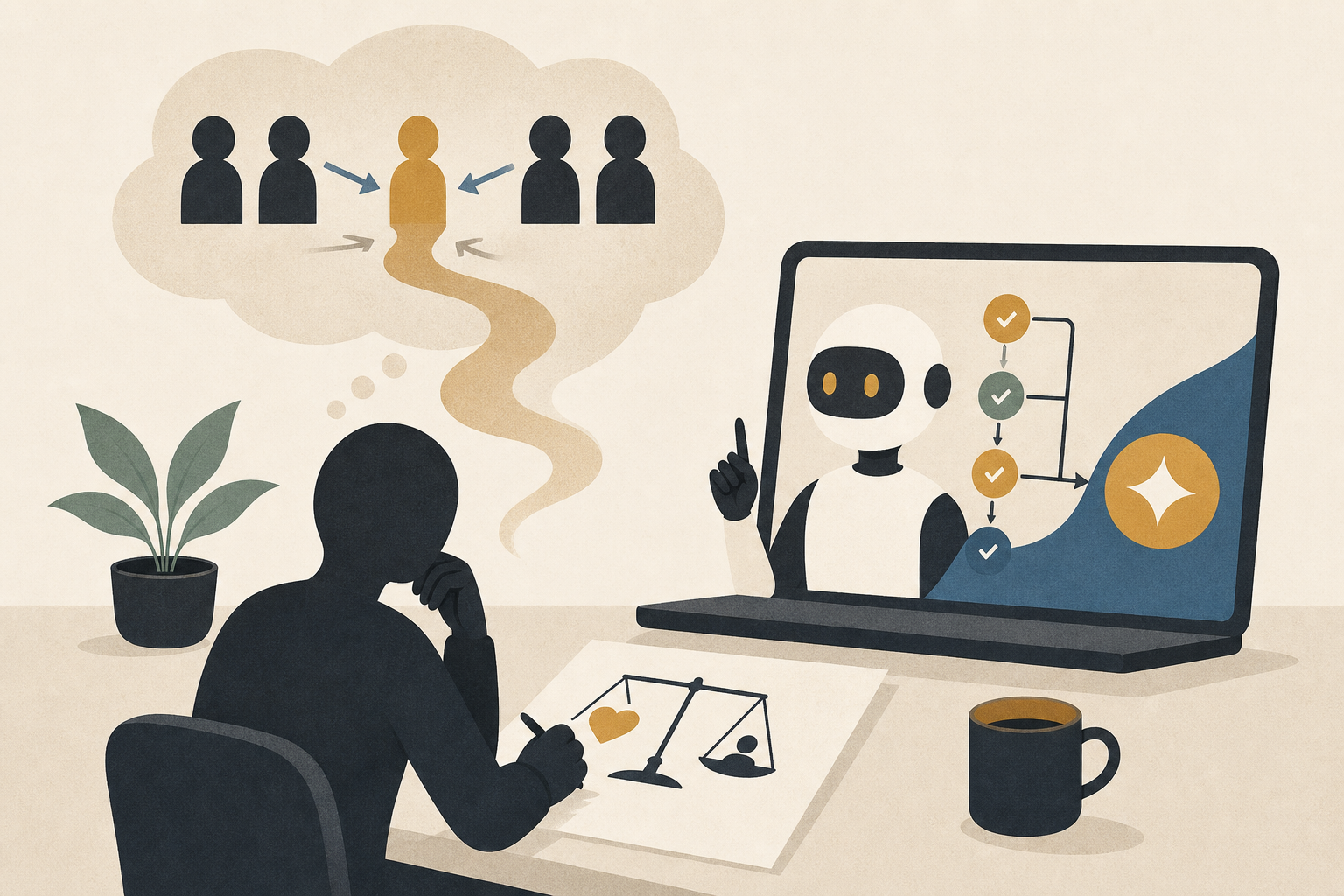
When AI Shows Its Reasoning, Human Moral Judgment Follows
A controlled experiment with 165 participants showed that an AI model with reasoning capabilities shifted people's moral decisions as strongly as a human majority. What this means for hiring, lending, and termination decisions — and why Human-in-the-loop design needs to go further than a final human approval.
2026 / 06 / 21
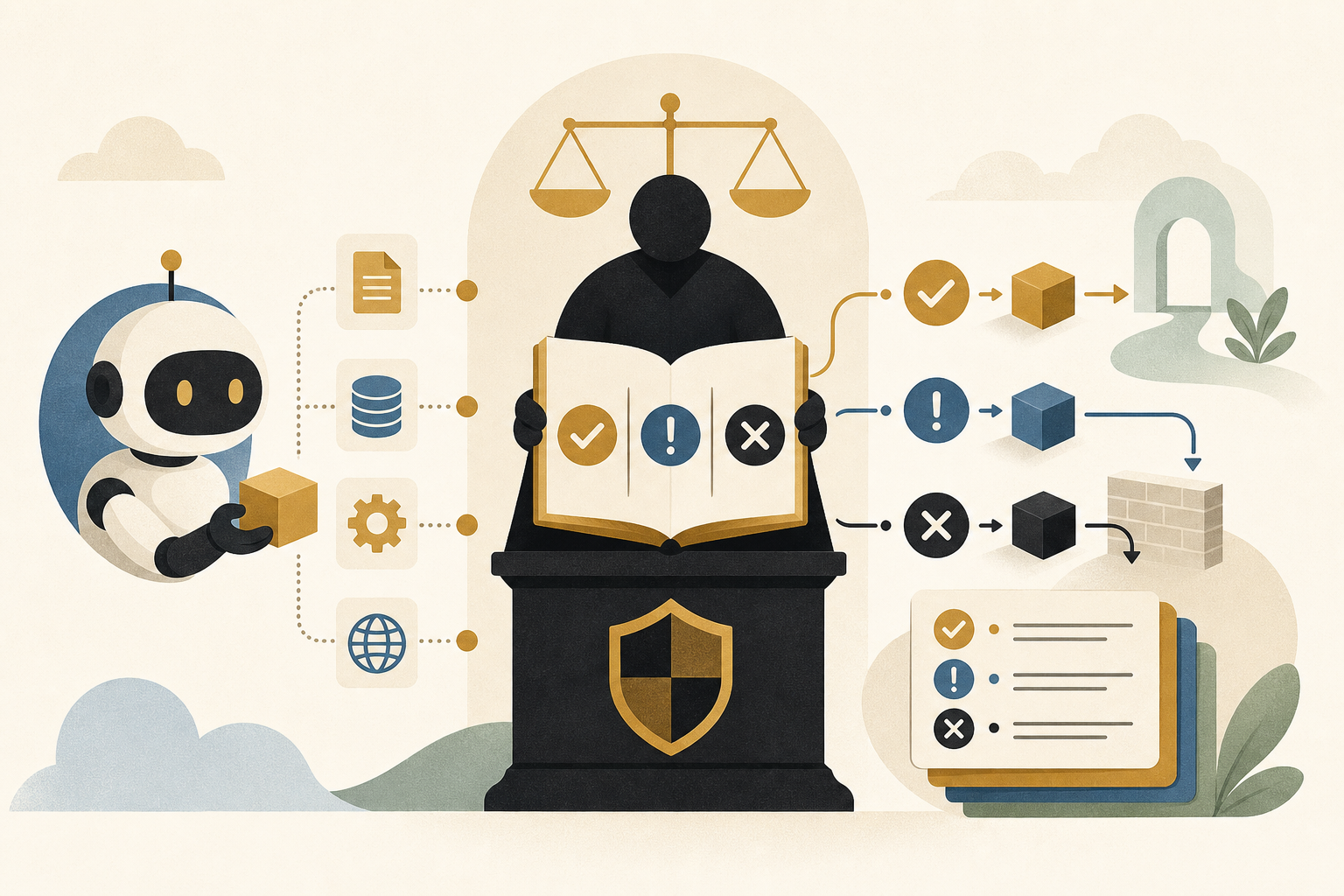
Governing AI Agents at Runtime: What Deontic Policies Can Do That Access Control Cannot
Authentication and access control are not enough to govern autonomous AI agents once they start acting. A study published on arXiv proposes AgenticRei, a framework that applies permission, prohibition, and obligation constraints in real time — with concrete implications for CISOs, legal teams, and GRC functions designing AI governance.
2026 / 06 / 21
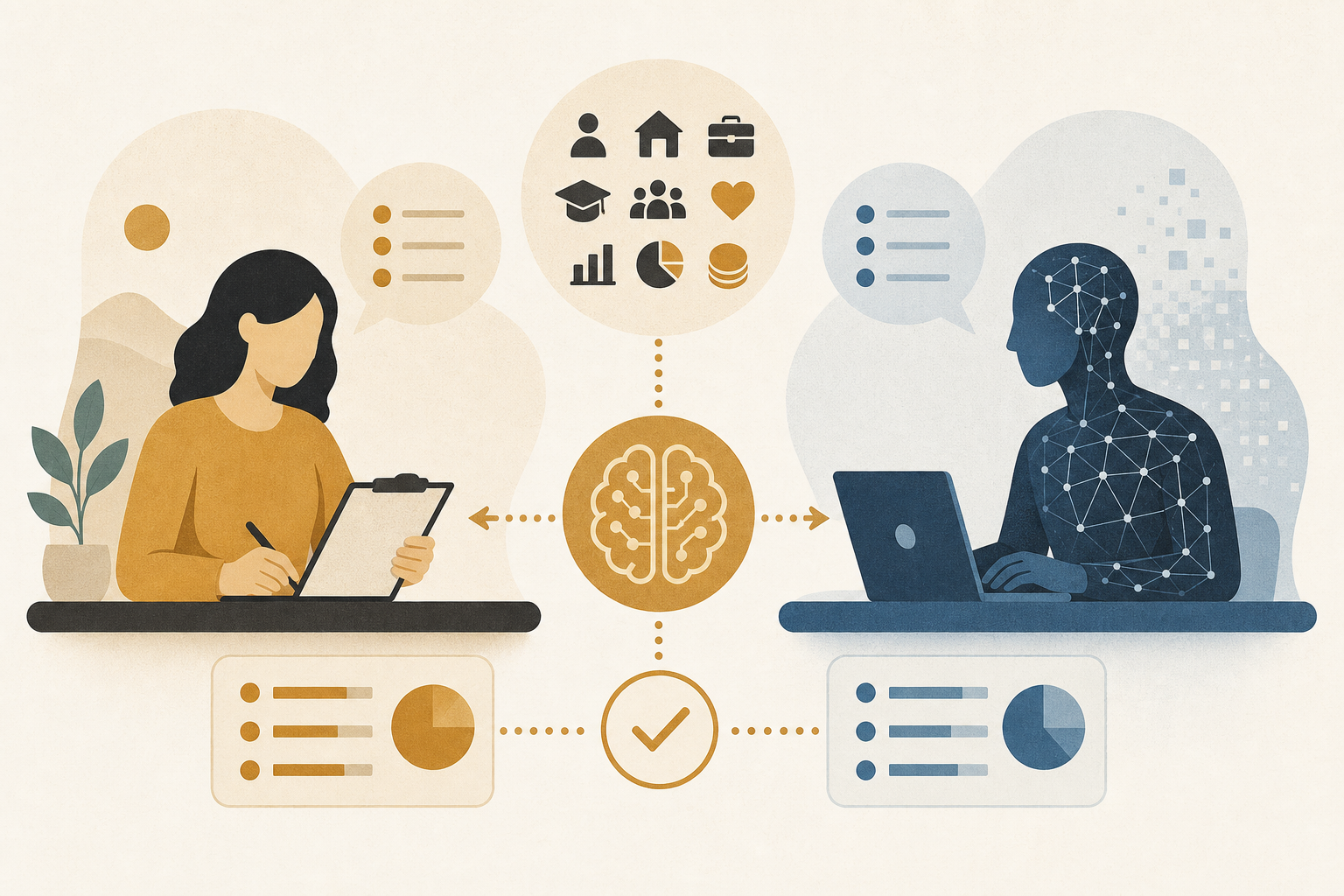
Can an LLM Reproduce Your Customer? What Synthetic Personalities Mean for Market Research
A study feeding individual response histories into LLMs achieved 78.8% accuracy in mimicking real survey respondents. With over 2.1 million synthetic responses analyzed, the findings point toward a concrete shift in how consumer insight work gets done.
2026 / 06 / 20
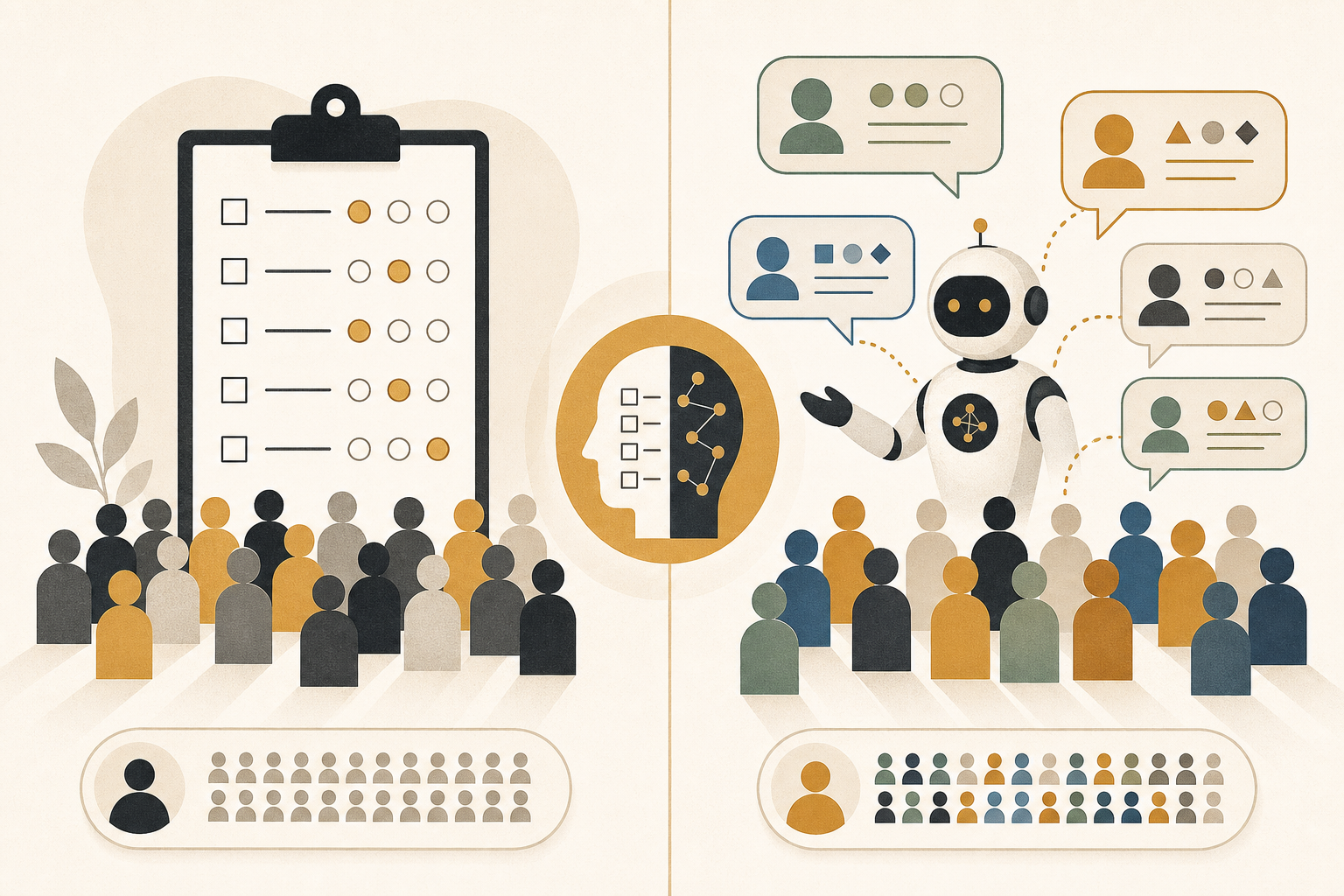
The Real Reasons Behind Disengagement Won't Show Up in Your Survey
Why did NPS drop? Why is engagement down? The honest answers rarely survive a multiple-choice survey. A 571-person experiment just proved that AI conversational interviewing can surface those hidden insights at scale — here's what that means for HR, market research, and VoC teams.

2026 / 06 / 20
What Are Directors Legally Responsible For When They Deploy Agentic AI?
As agentic AI enters enterprise workflows, the duties directors owe — and to whom — depend heavily on which corporate governance model their jurisdiction and company culture adopt. A new legal analysis maps four governance models onto AI deployment decisions, with direct implications for boards, legal teams, and CHROs.
2026 / 06 / 20
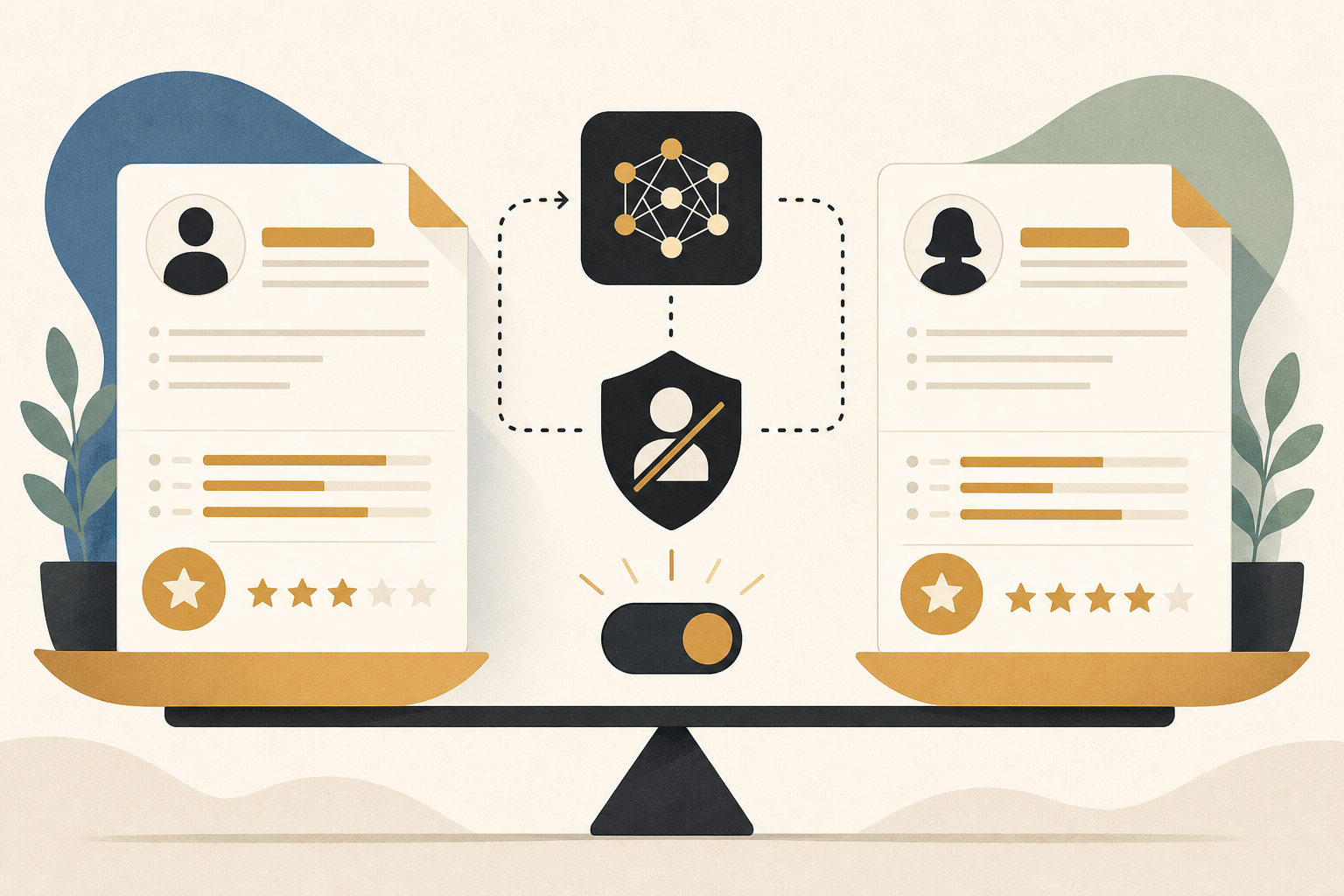
AI Hiring Tools Favor Women? What a Japanese-Context LLM Experiment Actually Found
Five state-of-the-art LLMs evaluated 60 Japanese-language resumes — and every single model showed a statistically significant pro-female bias. Prompt-level neutrality instructions had no effect. Only name removal worked, but it triggered a 42% rejection rate. Here's what this means for HR teams deploying AI screening tools.

2026 / 06 / 20
Did AI Just Outperform Human Therapists? What Mind Companion Means for Mental Health Tech
Mind Companion, an embodied AI system combining LLMs with a four-layer real-time analysis pipeline, received higher ratings than human therapists from 11 expert psychologists on comprehension and therapeutic alignment. Here is what that means for EAPs, HR tech, and digital therapy platforms.
2026 / 06 / 20
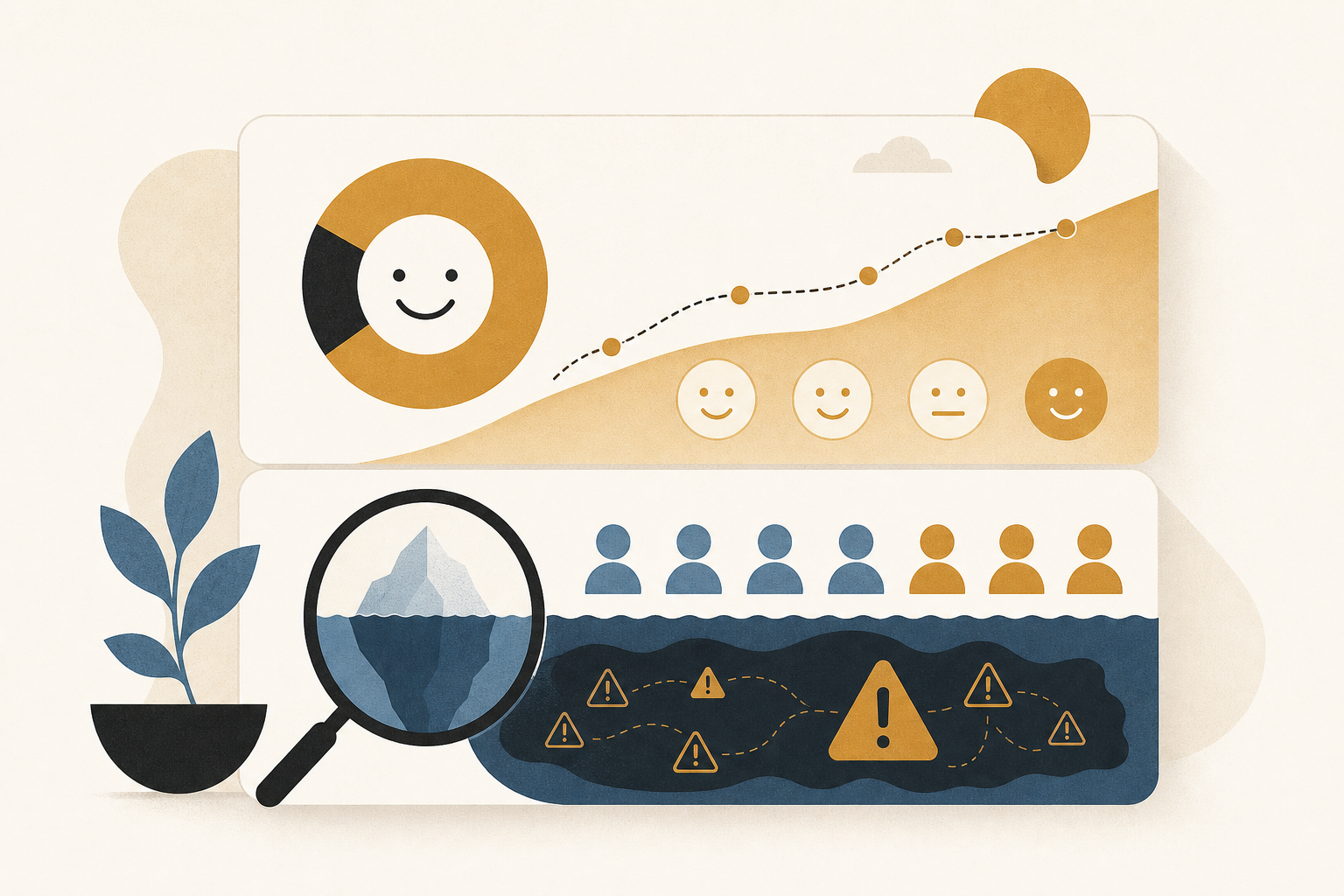
The 44% Your Sentiment Dashboard Can't See: What 70,000 Support Conversations Revealed
Across 70,000 support conversations, sentiment was positive but the problem went unsolved in 44% of cases. Customer satisfaction estimates correlated better with actual ratings than sentiment scores (0.47 vs 0.36). If your NPS is flat but churn keeps climbing, this research explains why — and what to measure instead.
2026 / 06 / 19
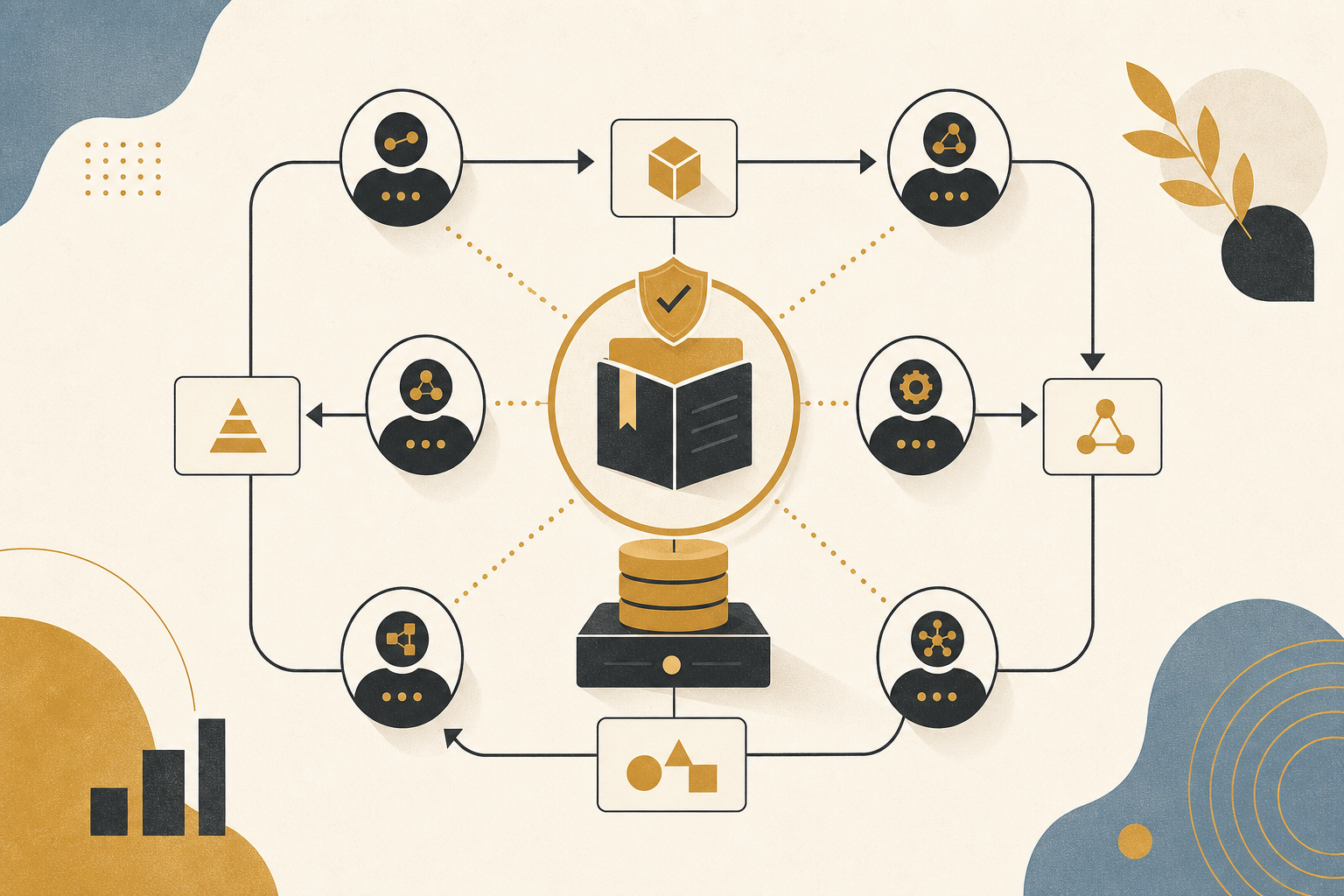
Can Your AI Agent Explain Why It Took That Action? The AGO Framework Says It Should
The AGO framework formalizes business processes around three axes — Agents, Goals, and Objects — and constructs a Business Process Knowledge Base that supports structured queries, incremental updates, and workflow generation. A governance-ready foundation for organizations deploying AI agents at scale.