
Column
Research, in business language.
We rewrite Affectosphere Group's research into something useful for business and practical decision-making. Each piece is a 5-minute read.

2026 / 06 / 01
Breaking the Cultural Wall in Emotion AI ── What 61% Bias Reduction Actually Means
When emotion AI sounds warm to American users but cold to Japanese users, that's not an accuracy problem — it's a structural bias problem. A 2026 paper introducing the Affective-CARA framework cut cultural expression bias by 61% using a knowledge graph approach. Here's what that means for global HR and CX teams.

2026 / 06 / 01
Cars Don't Need an LLM — The Era of Lightweight Models That Learn the 'Cognitive Chain'
'Slap GPT on the car and win' is already outdated. Why data-center-style designs break inside the cabin, and why lightweight models that embed cognitive science are stronger — a 5-minute brief for automotive and mobility leaders.

2026 / 06 / 01
Is AI Emotion Real? ── The Discovery of an Emotion Space That Matches Across Languages
The emotional map that LLMs construct structurally overlaps with the one humans use. A 2026 study validated this across multiple languages and cultures — and the findings give global emotion AI deployments a more solid empirical foundation than before.

2026 / 06 / 01
When Everyone Can 'Write Well' With AI, Where Does an Organization Measure Individuality?
In an era where anyone can mass-produce polished prose with AI, the thinking of the whole organization is quietly being homogenized. A 5-minute read from the latest research on argument rarity and our emotion-AI perspective.

2026 / 06 / 01
Emotion AI Went Team-Based ── Why One LLM Can't Do It Alone
Why does a single LLM keep hitting a wall when it comes to understanding emotions? A 2026 survey revealed a clear breakthrough: collaborative architectures where multiple LLMs divide the work. Here's what it means for product teams in 5 minutes.

2026 / 06 / 01
An AI That Takes “Thank You” at Face Value Will Lose Your Most Important Customers
When a customer says “well done,” is it praise or sarcasm? The moment your AI mistakes one for the other, NPS goes up, improvement priorities go down, and the genuinely angry customers leave in silence. Five minutes for CX leaders, drawn from two recent sarcasm-recognition papers.

2026 / 06 / 01
“Outrage Wins Clicks” Is Already Outdated — The AI That Tones Down Intensity Without Changing Meaning
What comes after a decade of media optimized for anger, anxiety, and outrage? An AI that preserves meaning while dialing down emotional intensity is quietly redrawing the competitive map for media, advertising, and content platforms. Five minutes.

2026 / 06 / 01
Why Emotion AI Needs Its Own Rules
Should we regulate emotion AI — the kind deployed in healthcare, education, and mental health — with the same frameworks we use for general AI? A 23-author interdisciplinary report says no, and lays out 10 concrete proposals for what's needed instead.

2026 / 06 / 01
Emotion-AI Projects Probably Die in the Gaps Between Layers
Most enterprise emotion-AI projects fail not because of technology, vendors, or the field, but because responsibility falls into the gaps between layers. A six-layer model, five design criteria, and the concept of emotional sovereignty — a 5-minute read for executives.

2026 / 06 / 01
Before 'AI Governance' Lands on the CEO's Desk — Just 3 Things
LLMs are no longer an IT-only matter. They are quietly shaping the language used in politics, education, and the workplace. Three control points an executive should keep their hand on — data, model selection, output review. A 5-minute guide.

2026 / 06 / 01
I Made GPT Take the Real-Estate Exam, and Saw the Shape of the Future of Licensed Professions
What happens when GPT-3.5 and GPT-4 take Japan's licensed real-estate broker exam. A 5-minute take, for legal tech, in-house legal, and licensed professionals, on how to turn an 'AI that can't pass' into a tool that makes pass-holders 1.5× more productive.

2026 / 06 / 01
ChatGPT Quietly Changes Its Tone Depending on the Country Name
'Russia,' 'Ukraine,' 'Iran,' 'the U.S.' — swap a country name and an LLM's output sentiment quietly tilts. A 5-minute take, for global PR, compliance, and government relations, on how to face geopolitical bias.
2026 / 06 / 01
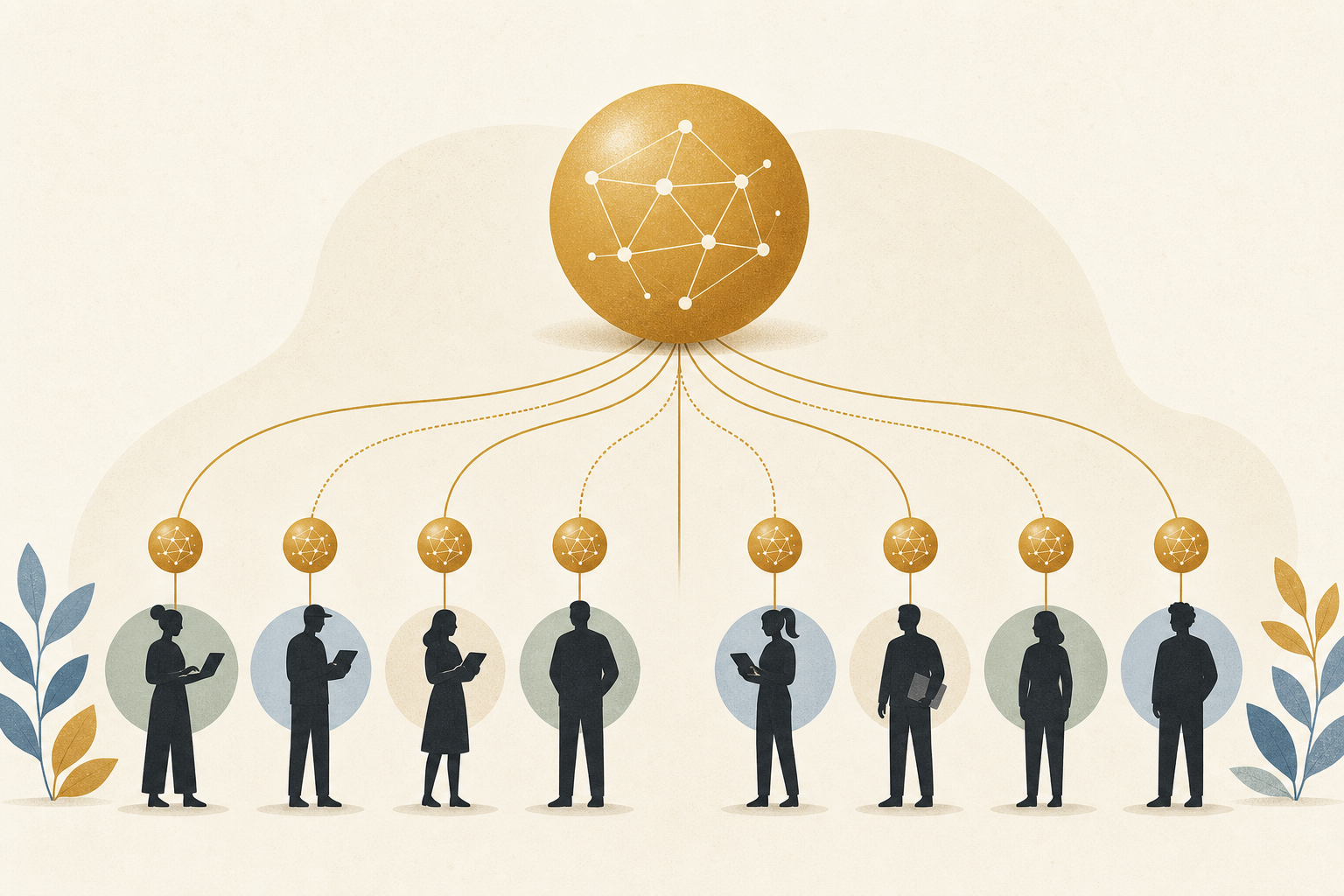
One AI Per Employee: How HR Quietly Changes
From 'roll out the same HR tool to everyone' to 'each employee has a personal AI that talks with the org AI.' A 5-minute take on the two-layer design for next-generation HR — for HR leads, organization developers, and executives.

2026 / 06 / 01
Emotion Data Is Shifting From “Collect” to “Create” — A Third Option Called Synthetic Data
Emotion-labeled data is hard to collect because of annotator burden, privacy, and representativeness. Three recent papers show that pairing domain knowledge with LLMs can resolve ethics and cost at the same time. Five minutes for data-ops leaders.

2026 / 06 / 01
A 4.5-Star and a 4.5-Star Are Not the Same — The Resolution Story for Emotion Data in Tourism
Reviews, social posts, photo captions. In an era where LLMs decode the fragments of emotion travelers leave behind, how do you act on a satisfaction structure that star ratings miss? Five minutes for tourism, municipal, and hospitality leaders.