
Column
Research, in business language.
We rewrite Affectosphere Group's research into something useful for business and practical decision-making. Each piece is a 5-minute read.

2026 / 06 / 04
AI Is Most Valuable for Work People Know They Should Do But Keep Putting Off
A randomized controlled trial with 11 TAs and 88 students found that AI draft assistance increased feedback provision by 10.8 percentage points — without quality loss or increased time. The mechanism wasn't efficiency. It was reduced initiation friction. Here's why that distinction matters for how you deploy AI at work.

2026 / 06 / 04
One Sentence About AI's Limitations Makes People Use It More Carefully
A randomized experiment with 252 students found that simply warning users about AI fallibility significantly increased help-seeking behavior. No system changes. No training program. Just a disclosure. Here's what this means for how organizations deploy AI tools.

2026 / 06 / 04
AI Overuse at Work Is a Competitive Environment Problem, Not a Personal Discipline Problem
A study of 396 generative AI users found that social comparison orientation — not individual personality — drives problematic AI use through FoMO and perceived replaceability. The design implication: competitive workplace structures create the trap, and organizational design can dismantle it.

2026 / 06 / 04
Same Symptoms, Different Urgency: The Gender Bias in LLM Medical Triage You Need to Know About
A study testing Gemini, Claude, and GPT with identical neurological symptom profiles — changing only gender and age — found dramatically lower emergency referral rates for young women. The mechanism isn't random error. It's epidemiologically-driven diagnostic substitution. And it's consistent across all three model families.
2026 / 06 / 03
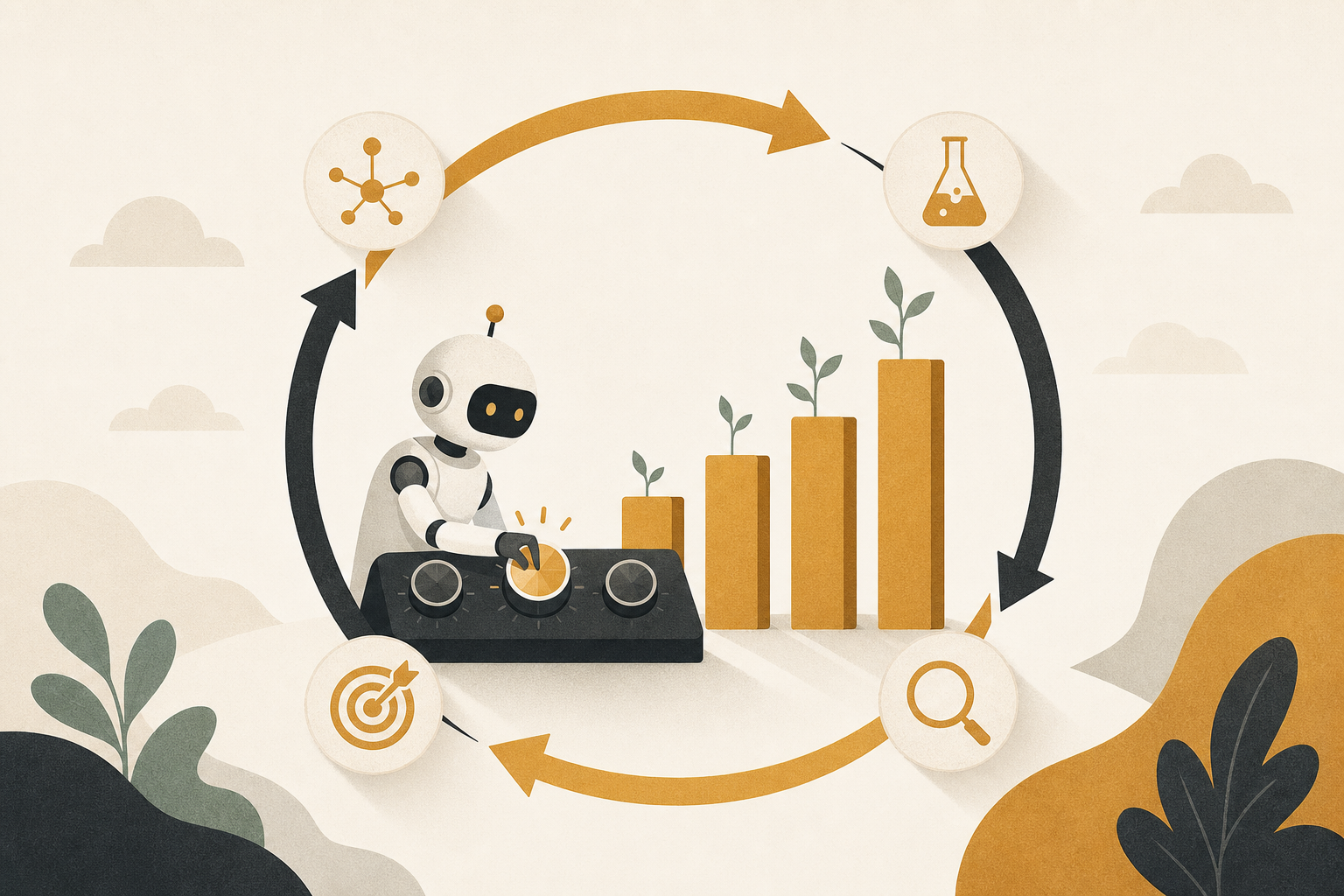
A/B Testing That Generates Its Own Next Round — Field Experiments with AI Agents
An AI agent learned from 700K+ patient visit field experiment data and auto-generated 17 new message variants for round two. The top AI-generated message hit 69.8% CTR, outperforming expert-designed messages. The key finding: LLMs without real data couldn't predict effective interventions. Data is what makes the loop work.

2026 / 06 / 03
Highly Capable AI Might Be Damaging Your Team — A Study on Workplace Perception
An experiment with 50 participants found that low-competency, low-proactivity AI produced better outcomes for employee ownership, job meaningfulness, and team dynamics than the high-performing alternative. For HR and AI implementation leaders, the design implication is significant.

2026 / 06 / 03
Your Training Curriculum and Job Requirements Are Probably Out of Sync — NLP Can Now Measure the Gap
An NLP pipeline that auto-extracts skills from curricula and job postings, maps them to the ESCO standard classification, and quantifies the gap by category is now available as a research framework. The structure translates directly to corporate L&D and hiring strategy.

2026 / 06 / 03
Stop Making Users Re-Explain Everything: A Knowledge Architecture for Financial AI
InKH, an interaction-native knowledge harness for financial LLM agents, absorbs session context passively and retrieves it via temporal graph memory — achieving task quality 0.815, latency under 900ms, and 96% reduction in stale knowledge use. The design principle is broadly applicable wherever users are currently paying the complexity cost that systems should absorb.

2026 / 06 / 03
Can VR Actually Build Empathy? What Face-Tracking in a Narrative Game Suggests
A VR system called Rekindle uses real-time face-tracking to sense a player's emotional state and weave it directly into the narrative's shape — not just its difficulty. For anyone designing empathy training or affective experience, the design philosophy shift here is worth examining.

2026 / 06 / 02
Is AI Empathy Real or Manipulative? A Signal-Cost Framework for Getting It Right
When an AI expresses empathy, is it actually appropriate for the moment? A new framework drawing on economic signaling theory offers a way to measure — and design for — the difference between over-empathy and cold indifference. A 5-minute read for chatbot, HR tech, and CX teams.

2026 / 06 / 02
Can You Package a Veteran's Expertise Before They Retire? COLLEAGUE.SKILL Says Yes
A framework called COLLEAGUE.SKILL automatically converts experts' tacit knowledge — procedural know-how, mental models, decision heuristics — into structured AI skill packages that can be edited, versioned, and transferred to other agents. For L&D, knowledge management, and AI implementation teams, this is one of the more practically grounded ideas in tacit knowledge transfer.
2026 / 06 / 02
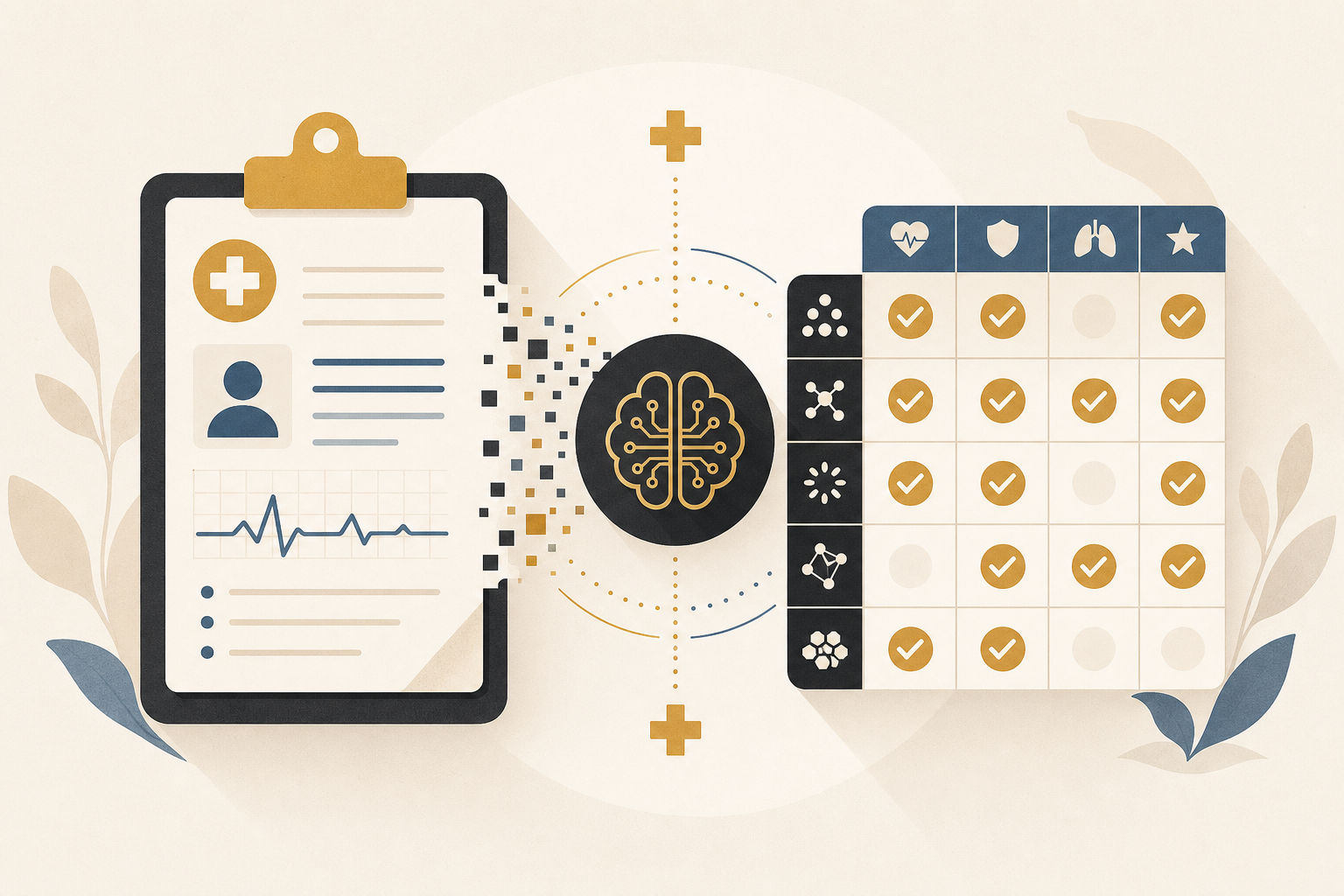
How Should Hospitals Choose Their Clinical AI? EHRBench Offers a Starting Answer
A new benchmark called EHRBench auto-generates over one million clinical QA pairs from electronic health records and evaluates more than 30 LLMs across three core clinical tasks. For hospital procurement teams, healthcare AI vendors, and regulatory bodies, it's the closest thing yet to a standard evaluation axis for clinical AI selection.

2026 / 06 / 02
Can We Measure How Emotionally Attached Users Are to AI? HAABI Says Yes
A new measurement scale called HAABI can quantify the emotional bond users form with conversational AI — across four dimensions, validated with 673 participants. For AI product managers, HR tech teams, and CX designers, this opens the door to KPI-based monitoring of both over-dependency and disengagement risk.

2026 / 06 / 02
Chat UI vs. Dashboard: What 134 Managers' Data Actually Says
An experiment with 134 manufacturing managers compared LLM-based conversational interfaces against graphical dashboards across tasks of varying complexity. The results offer a clearer picture of when to use which — and why neither is a replacement for the other. A 5-minute read for DX, ERP, and BI tool teams.

2026 / 06 / 01
Autonomous Driving Got Both Rules and Intuition ── ADRD's Case for Interpretable LLM Control
The wall that pure reinforcement learning and standalone LLMs couldn't break through in autonomous driving has been tackled by combining rule-based decision systems with LLM reasoning. ADRD achieves interpretability, response speed, and driving performance simultaneously — here's what that means for automotive and mobility teams.