
Column
Research, in business language.
We rewrite Affectosphere Group's research into something useful for business and practical decision-making. Each piece is a 5-minute read.
2026 / 07 / 08
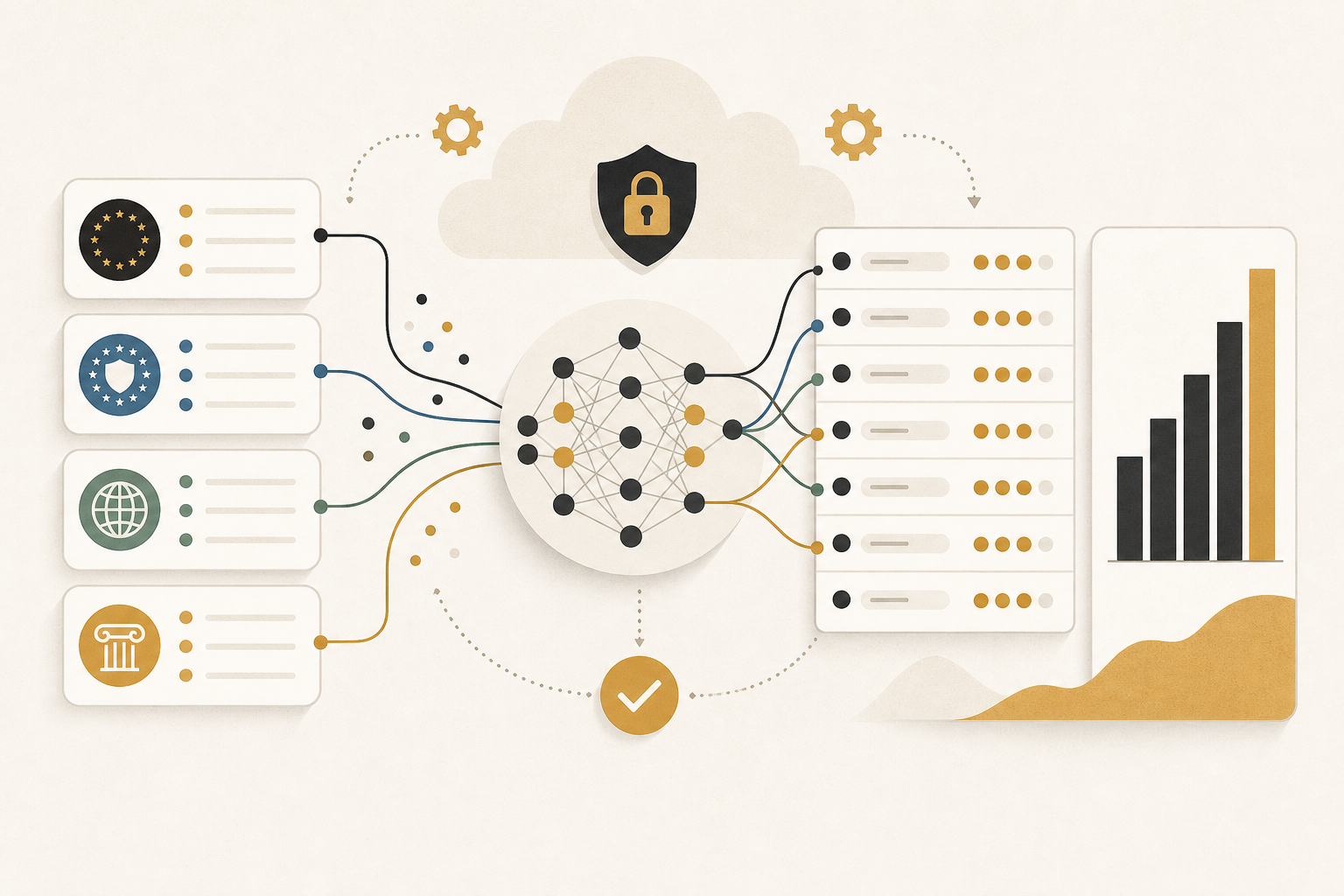
Stop tracing by hand which standard each control satisfies — automating cloud compliance mapping with sentence encoders
Cross-checking your cloud controls against multiple European security standards like ENISA and NIS2 — figuring out which requirement each one satisfies — still depends on expert hands. A domain-adapted sentence encoder improved control-to-metric mapping by up to +23 nDCG@10 points over baseline and reached 0.870 nDCG@10 on cross-standard association. Here is how GRC, IT audit, and FinTech/MedTech teams could try it — departments and KPIs included.
2026 / 07 / 08
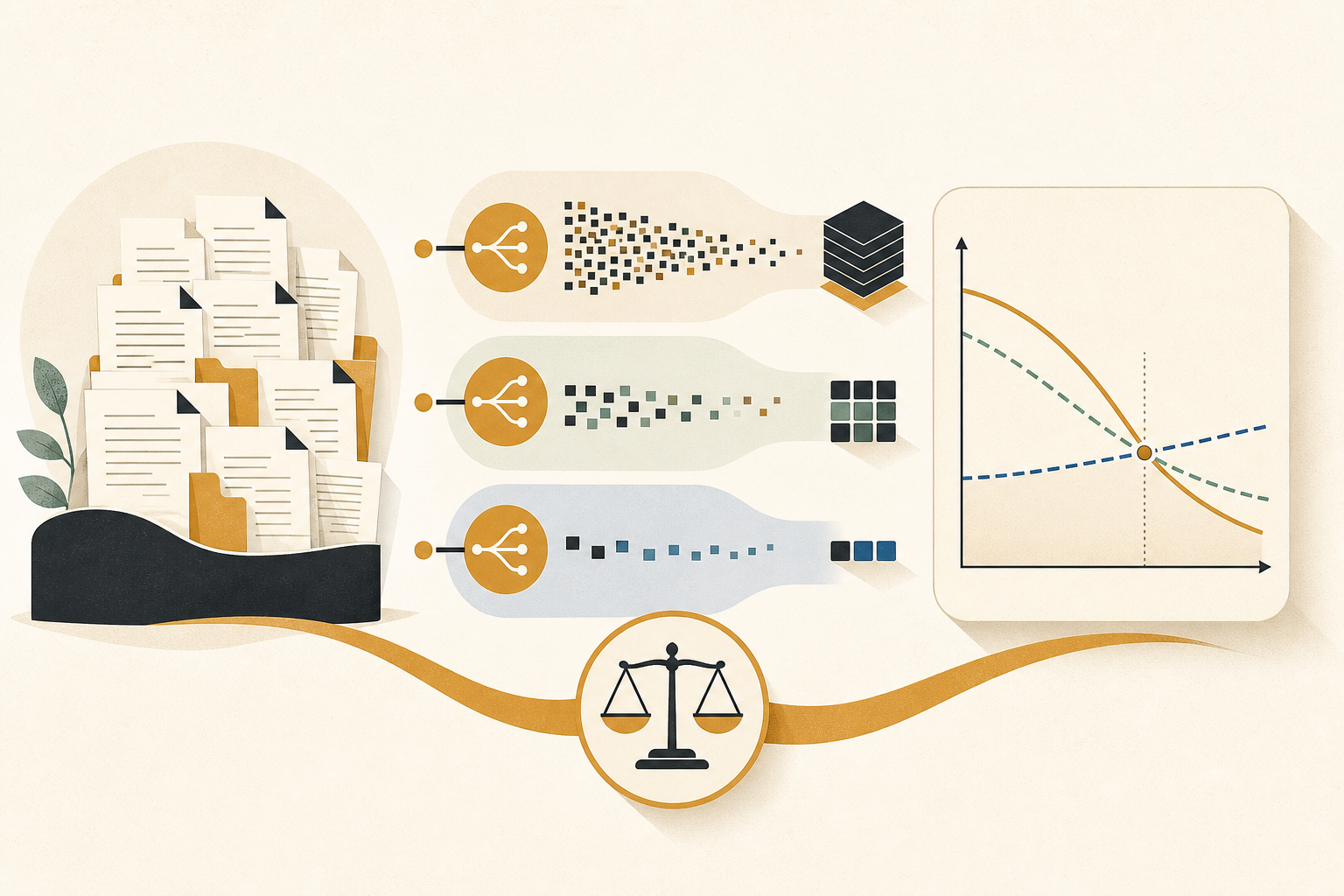
Stop feeding whole contracts to the AI — cutting legal-document API cost by up to 56x with inject vs. navigate
When you have an LLM read a pile of transactional contracts and answer questions, dropping the full text into the prompt is the most natural move. It is also the most expensive one under token billing. On a 20-question benchmark, reranked semantic retrieval kept the same accuracy while cutting context tokens by 17.3x, and the LLM-navigation approach NAVINDEX compressed context size by about 56x. Here is how to lower the API cost of contract-review and legal-research AI structurally, from a legal-tech point of view.
2026 / 07 / 08
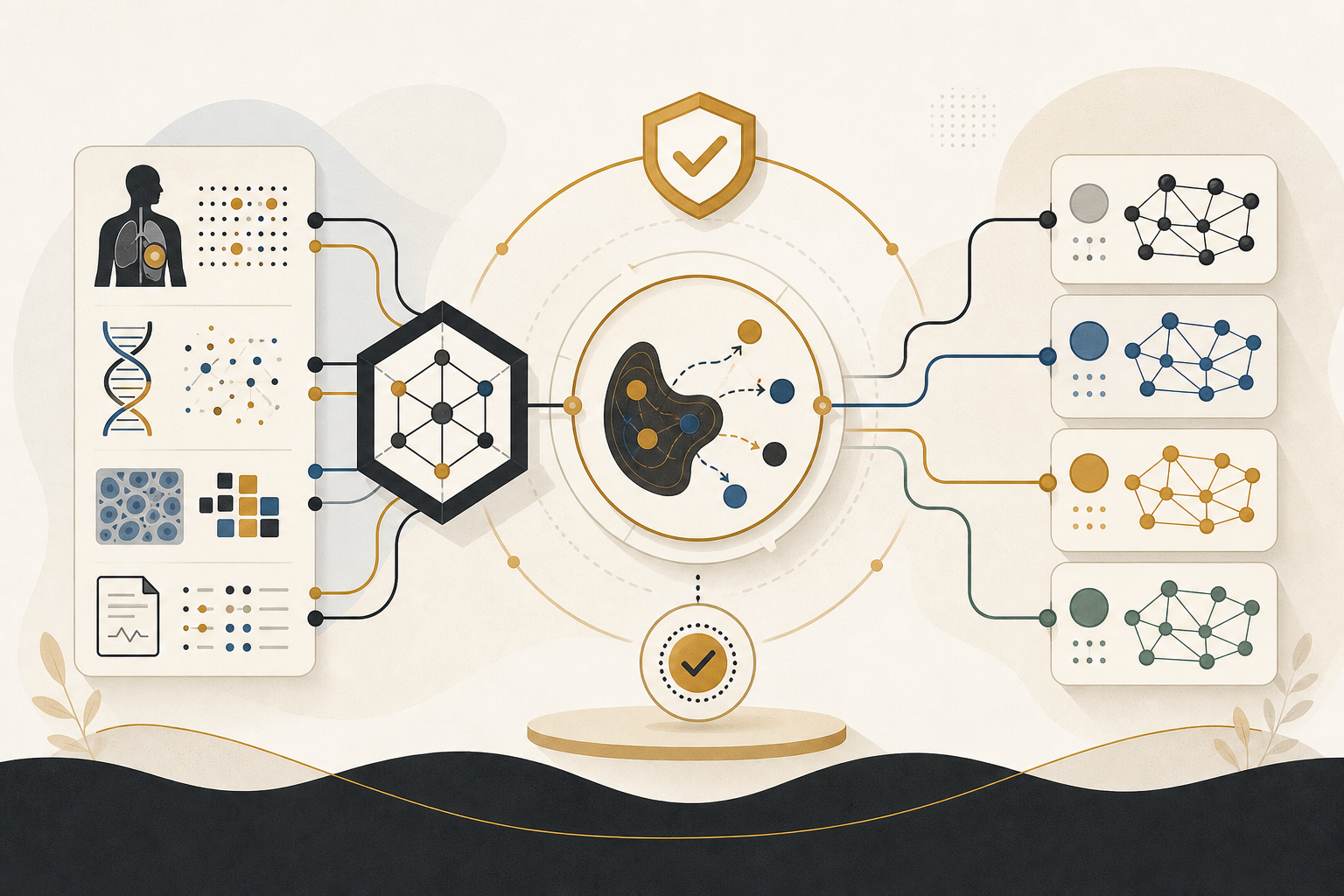
Cutting oncology AI's vendor lock-in by design — LCA, a decision-support framework where you keep swapping the model
When a hospital brings in AI-assisted diagnosis, many people worry: what if we get chained to this vendor and cannot switch in a few years? LCA separates data ingestion, clinical routing, and inference into three layers so you can freely swap only the AI model that does the reasoning. Here is a concrete proposal for how a cancer hospital's health informatics team could bake it into AI procurement criteria.

2026 / 07 / 08
Can LLMs Serve as the Opening Act for Consumer Research? Projective Techniques, Synthetic Data, and What It Means for the Field
Can LLMs replace human respondents in projective techniques — the qualitative methods that surface consumers' hidden associations, emotions, and desires? A new study comparing LLM-generated and human responses across multiple models, prompting strategies, and temperature settings offers a nuanced answer.
2026 / 07 / 08
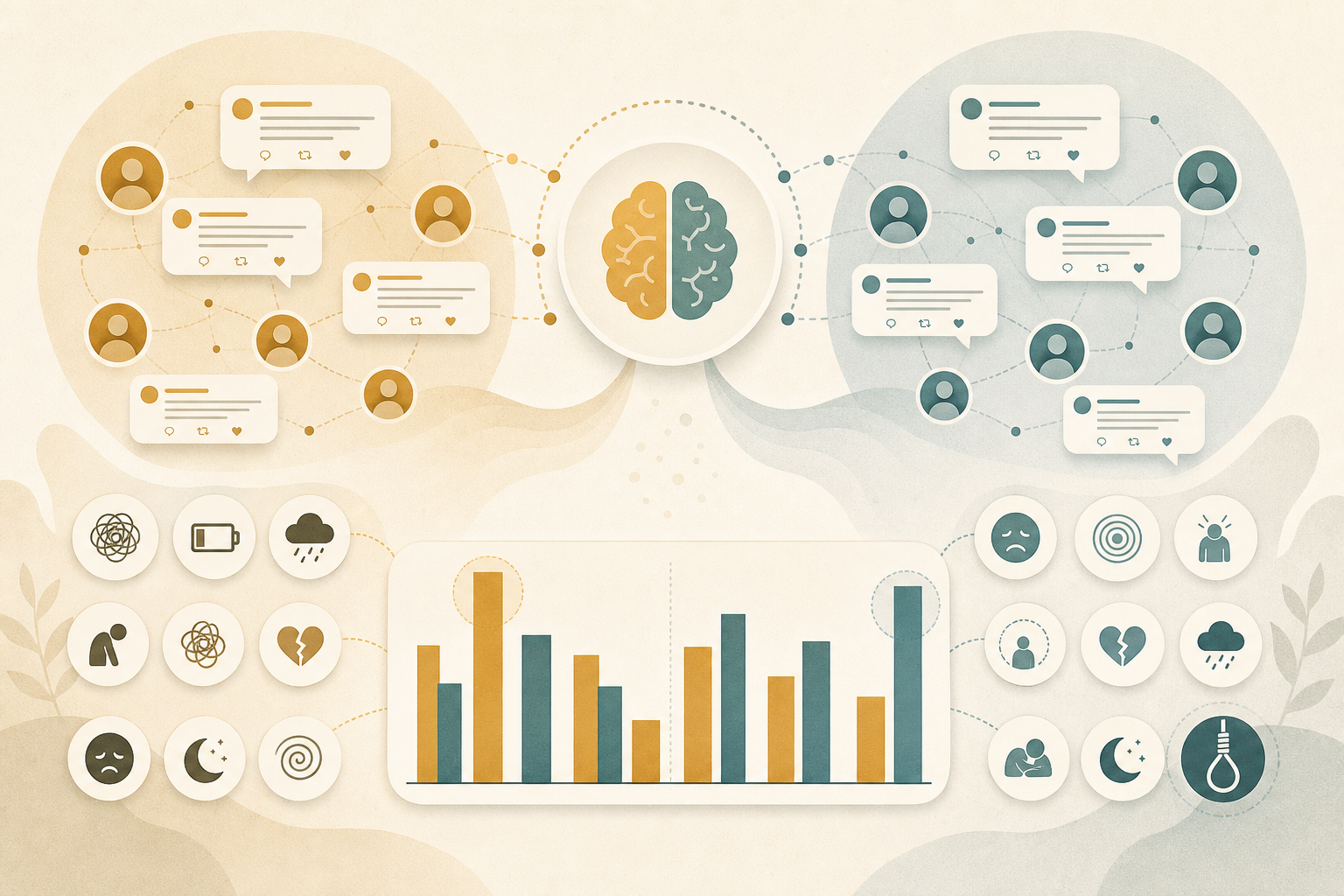
What 1.3 Million Tweets Reveal About Depression in ADHD and ASD Communities
Researchers profiled DSM-5 depressive symptoms across 792 self-reported ADHD and ASD Twitter users using MentalRoBERTa fine-tuned on ReDSM5. Differences emerged between the two groups — with important caveats about what population-level data can and cannot tell us.
2026 / 07 / 06
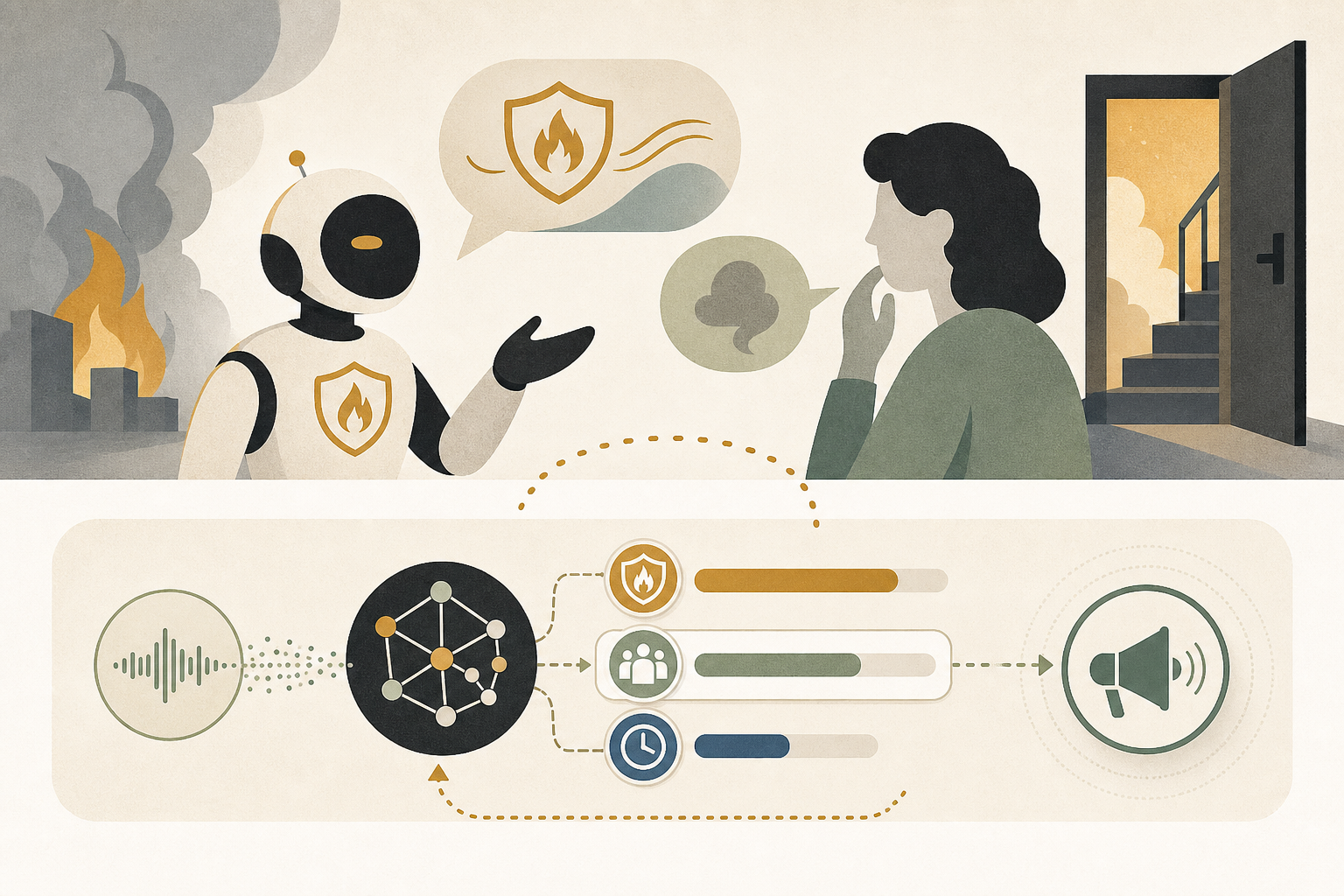
Fixed Scripts Can't Persuade a Resident Who Refuses to Evacuate — The Era of Per-Utterance Policy Switching
When residents refuse to evacuate a burning building, which persuasion strategy should an AI choose? DiPS, a Q-learning dialogue policy framework, offers an answer — and a blueprint for high-stakes call center scenarios.

2026 / 07 / 06
The Words Around a Chart Change What You Feel: A Framing Experiment in Data Visualization
Episodic or thematic? When an 800-person experiment varied the text framing around the same mass shooting statistics, emotional valence shifted significantly — and the implications for AI-generated data storytelling are hard to ignore.
2026 / 07 / 06
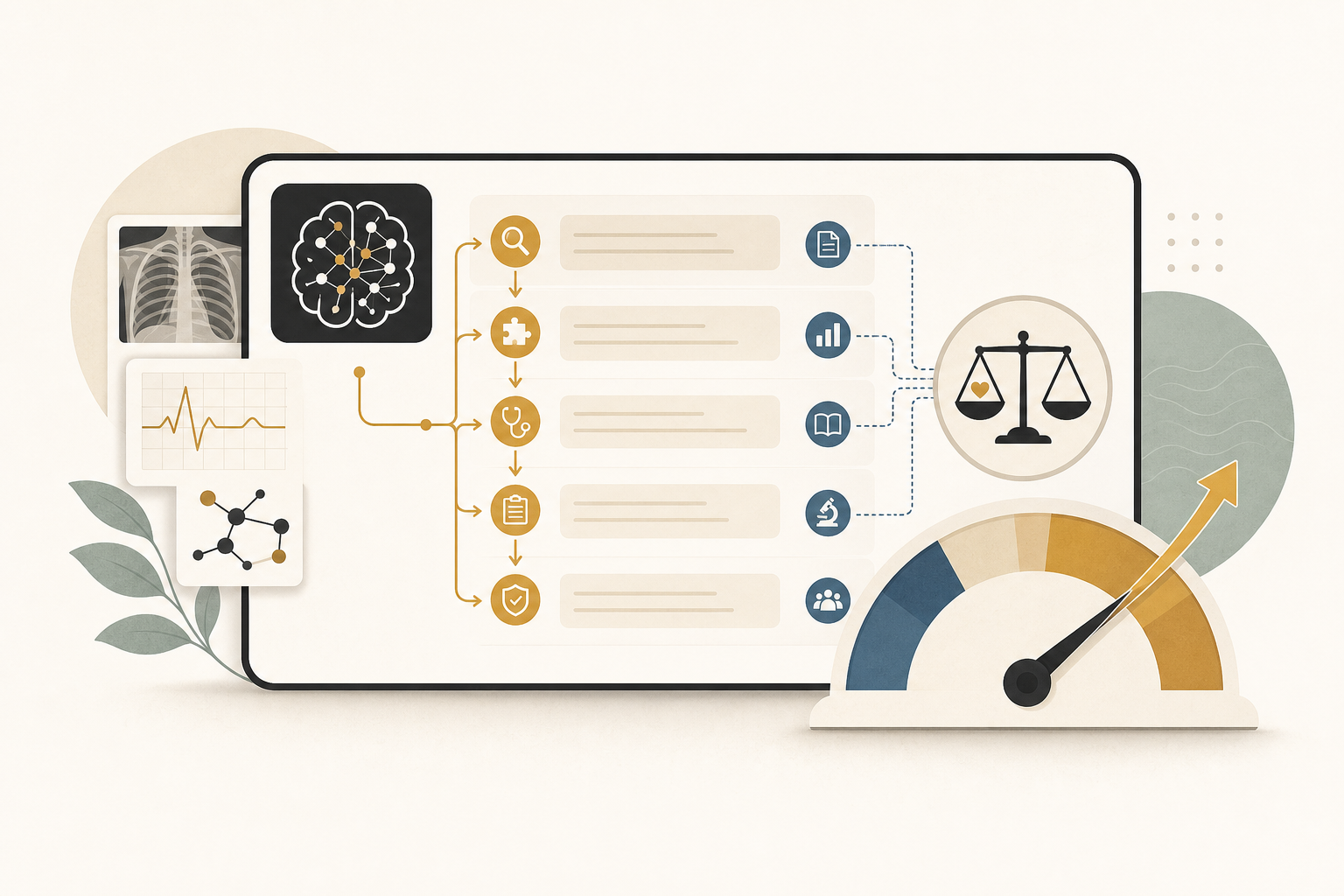
Can Medical AI Explain Why? FaithMed's Step-Level Supervision for Faithful Clinical Reasoning
FaithMed trains LLMs with clinician-designed rubrics and step-level process rewards, achieving roughly 9% gains over agentic search baselines on 7 medical benchmarks — and building the audit trail that real healthcare deployment demands.
2026 / 07 / 06
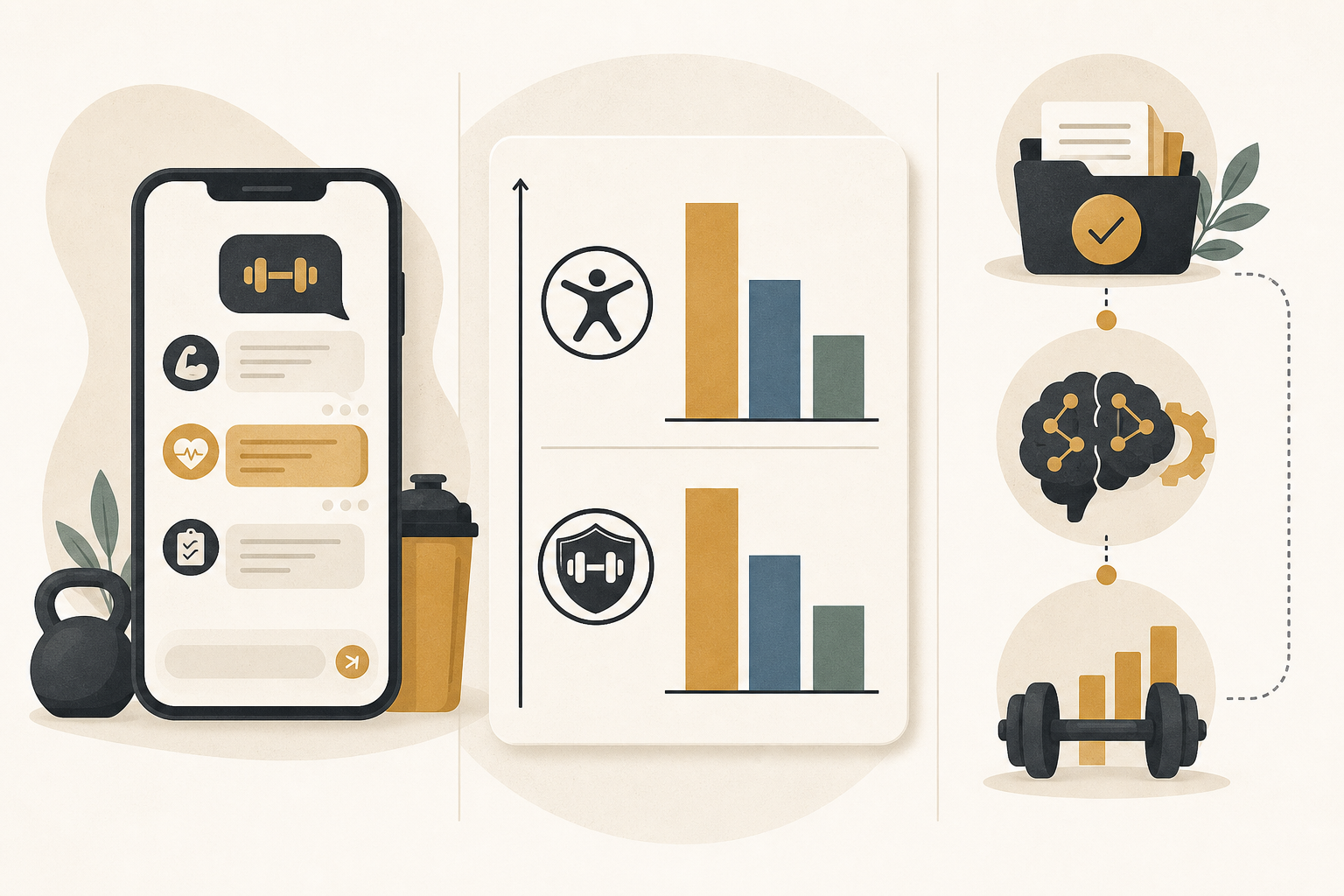
Can AI Replace a Personal Trainer? FitOne's Blueprint for Domain-Specific LLM Post-Training
FitOne — a fitness-specialized LLM built on Qwen3 with a three-stage post-training pipeline — outperforms baseline models by up to 12.73% on professional fitness certification exams, and offers a reusable architecture for scalable domain-specific AI.
2026 / 07 / 06
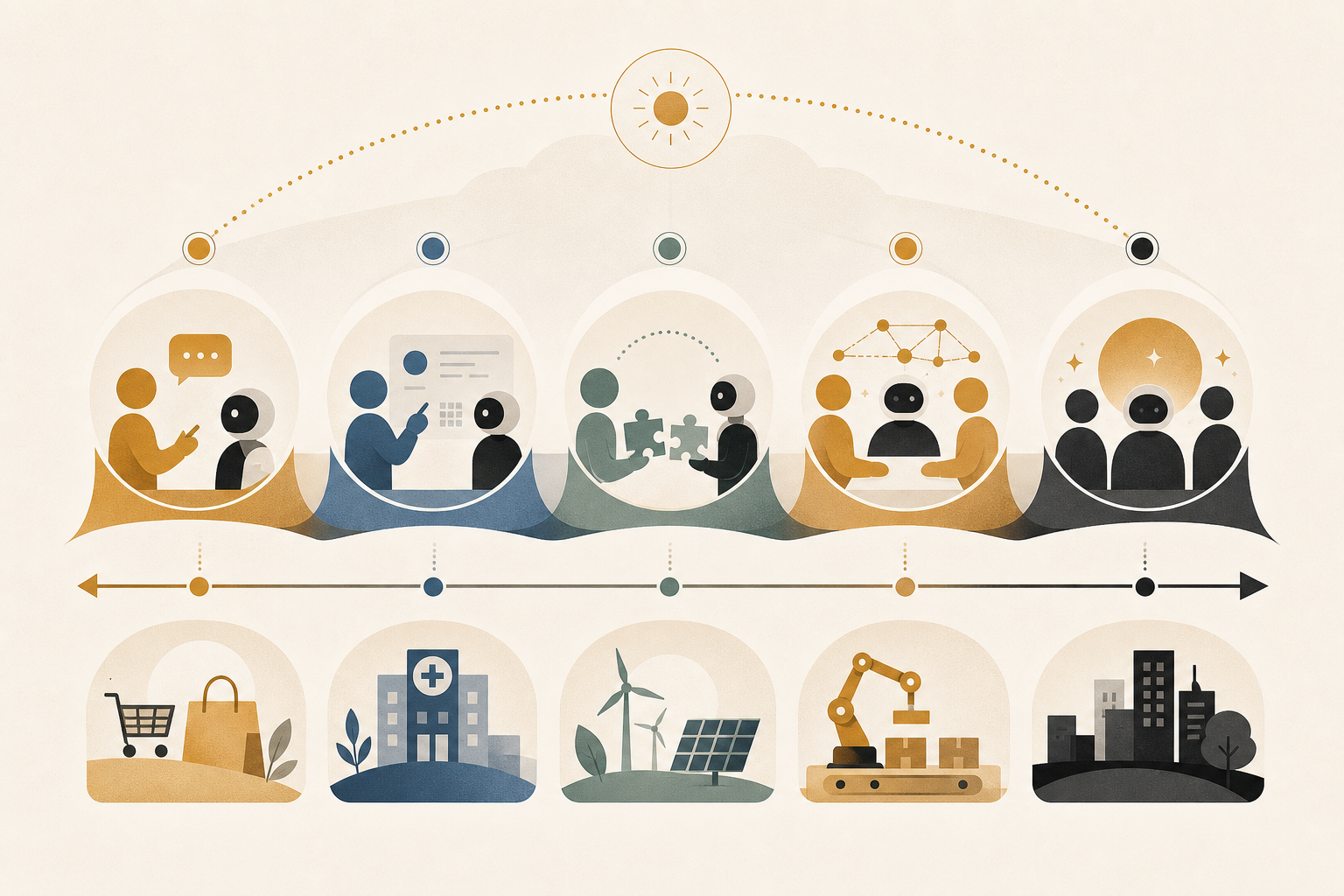
"Human-AI Collaboration" Is Actually Five Different Things — The Taxonomy That Exposes an AI Deployment Blind Spot
A systematic analysis of 53 papers reveals five qualitatively distinct human-AI team clusters — and shows that researchers using the same phrase "human-AI teaming" often mean entirely different team dynamics. Here's what that means for enterprise AI deployment design.
2026 / 07 / 02
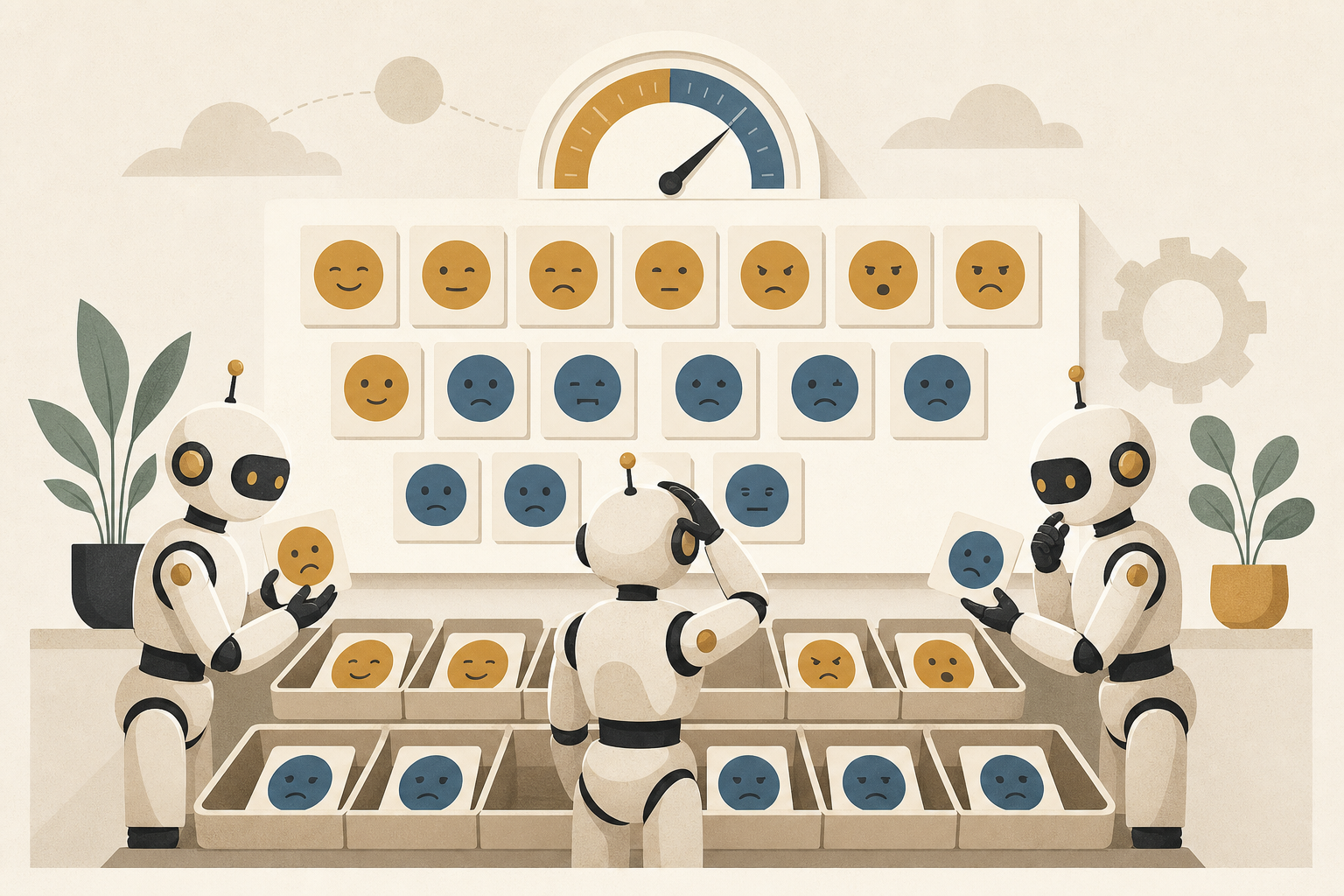
How Well Can LLMs Read Human Emotions? A 13-Class Benchmark Reveals a Zero-Shot Ceiling at Roughly 40%
Claude, GPT-5.4, and Gemini were benchmarked zero-shot on a 13-class emotion taxonomy across 131,306 sentences — and all three plateaued at around 40% accuracy. Here is what the 'affective gap' means before you build emotion AI into your product.

2026 / 07 / 02
The Weakness of AI Agents Is Forgetting — AutoMem Turns Memory Management into a Learnable Skill
What to remember, when to recall, how to organize — AutoMem implements this 'metamemory' as a learnable skill for LLM agents. Memory optimization alone boosted performance 2–4x and lifted a 32B open model to compete with top-tier commercial models. Essential reading for enterprises deploying agents on long-horizon work.

2026 / 07 / 02
From Fixed to Fluid: Why Conversational AI Should Switch Personalities with Context
Agent personality works best at moderate intensity — and the optimal personality shifts with context. A look at the fluid personality framework, which co-adapts persona metaphors (coach, tutor, librarian, tool) and expression intensity, and how it maps onto contact-center CX.

2026 / 07 / 02
AI Made Code Cheap. What Got Expensive Is Judgment — A 12-Week, 420KLOC Case Study on Governance Transformation
A veteran engineer built a 420KLOC production system with an AI coding agent in 12 weeks. The first-person case study yields a process theory of governance transformation — converting agent failures into control mechanisms. Required reading for teams adopting Copilot or Cursor.

2026 / 07 / 02
Is Your AI Quietly Pushing a Brand? D2D Exposes Stealth Biases in LLMs — and Points to a New 'Pre-Deployment Audit' Practice
Stealth brand-steering biases that are invisible in text output, internal representations, and model weights can be surfaced through distillation. A look at D2D and what it means for enterprises procuring LLMs from external vendors.