
Column
Research, in business language.
We rewrite Affectosphere Group's research into something useful for business and practical decision-making. Each piece is a 5-minute read.
2026 / 06 / 10
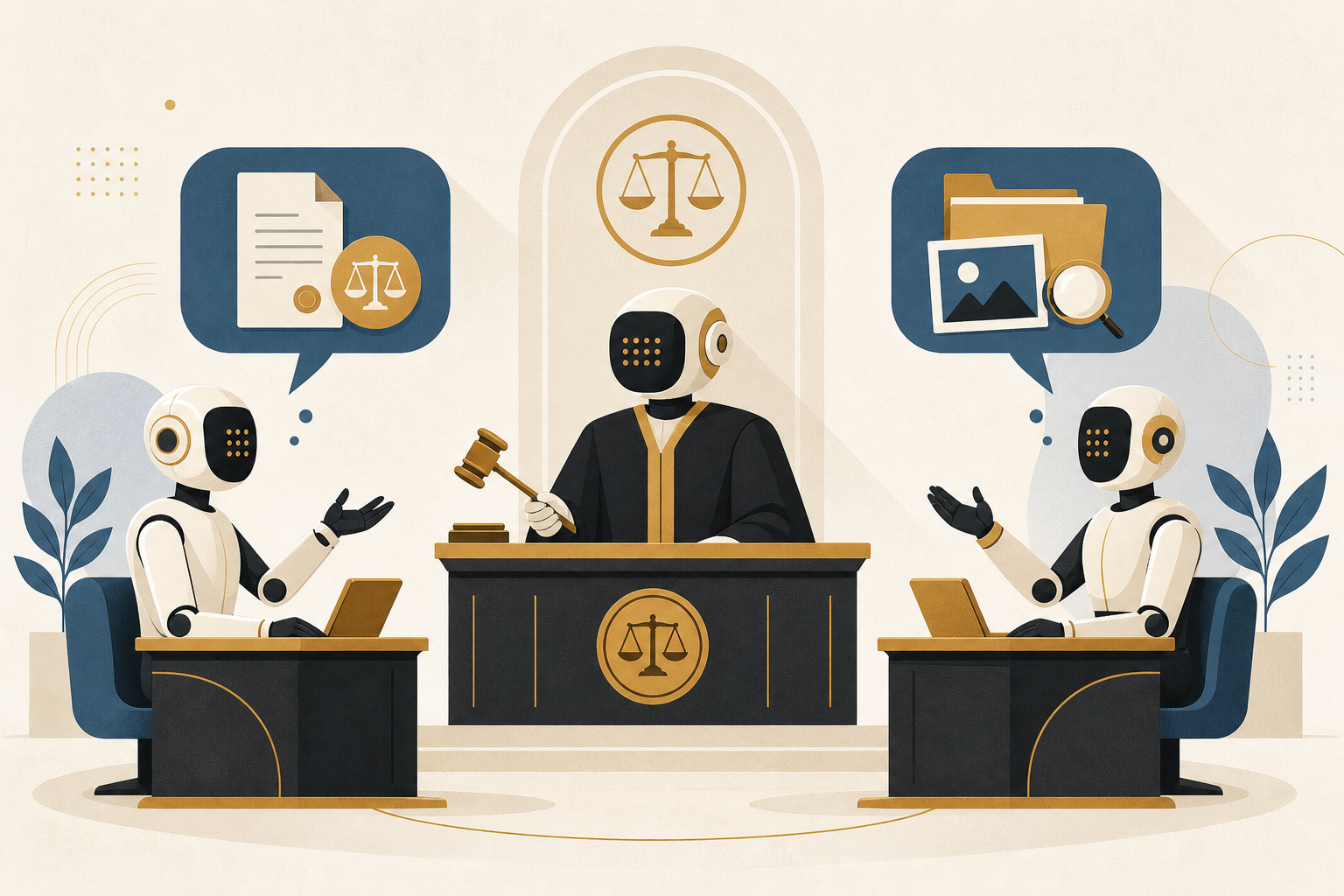
AI in the Courtroom: Simulating Civil Trials to Forecast Litigation Outcomes
A multi-agent framework assigns LLMs the roles of judge, plaintiff, and defendant, then runs the full five-stage civil trial procedure to generate structured verdicts. The result is a practical pre-litigation tool that lets legal teams stress-test arguments and estimate damage ranges before committing to a court battle.

2026 / 06 / 10
No CIG Required ── LLMs Are Now Auditing Clinical Records Straight from the PDF
Verifying whether patients received guideline-compliant care has long required costly conversion of clinical guidelines into computer-interpretable formats. A pilot at an Italian hospital now shows that a six-stage LLM pipeline can audit 463 stroke patient records against 50 extracted rules — using nothing but the original PDF guideline and discharge summaries.

2026 / 06 / 10
Speaking the Same Language: A New Strategy for Multimodal Sentiment Analysis
When AI tries to read emotion from both text and images, it often runs into a hidden problem: the two sources are encoded in completely different numerical spaces. A new paper fixes this at the root, achieving state-of-the-art results on multiple benchmarks.

2026 / 06 / 10
Predicting the Scroll You'll Regret ── Wearables and Context Sensing for Social Media Regret Detection
Regret after doomscrolling isn't driven by time spent — it's driven by the gap between what you intended and what you actually did. An MIT–University of St. Gallen team ran a 7-day in-the-wild study with 21 participants to show wearable-plus-context sensing can predict regretful sessions before they fully unfold. Here's what that means for wellness app developers, HR teams, and platform wellbeing units.

2026 / 06 / 09
AI Agents Can Return 87% of Your Time — But That's Not Even the Main Story
Production data from Perplexity shows autonomous AI agents cut task time by 87% and costs by 94%. But the more important finding is what happens to workers after the time savings arrive.
2026 / 06 / 09
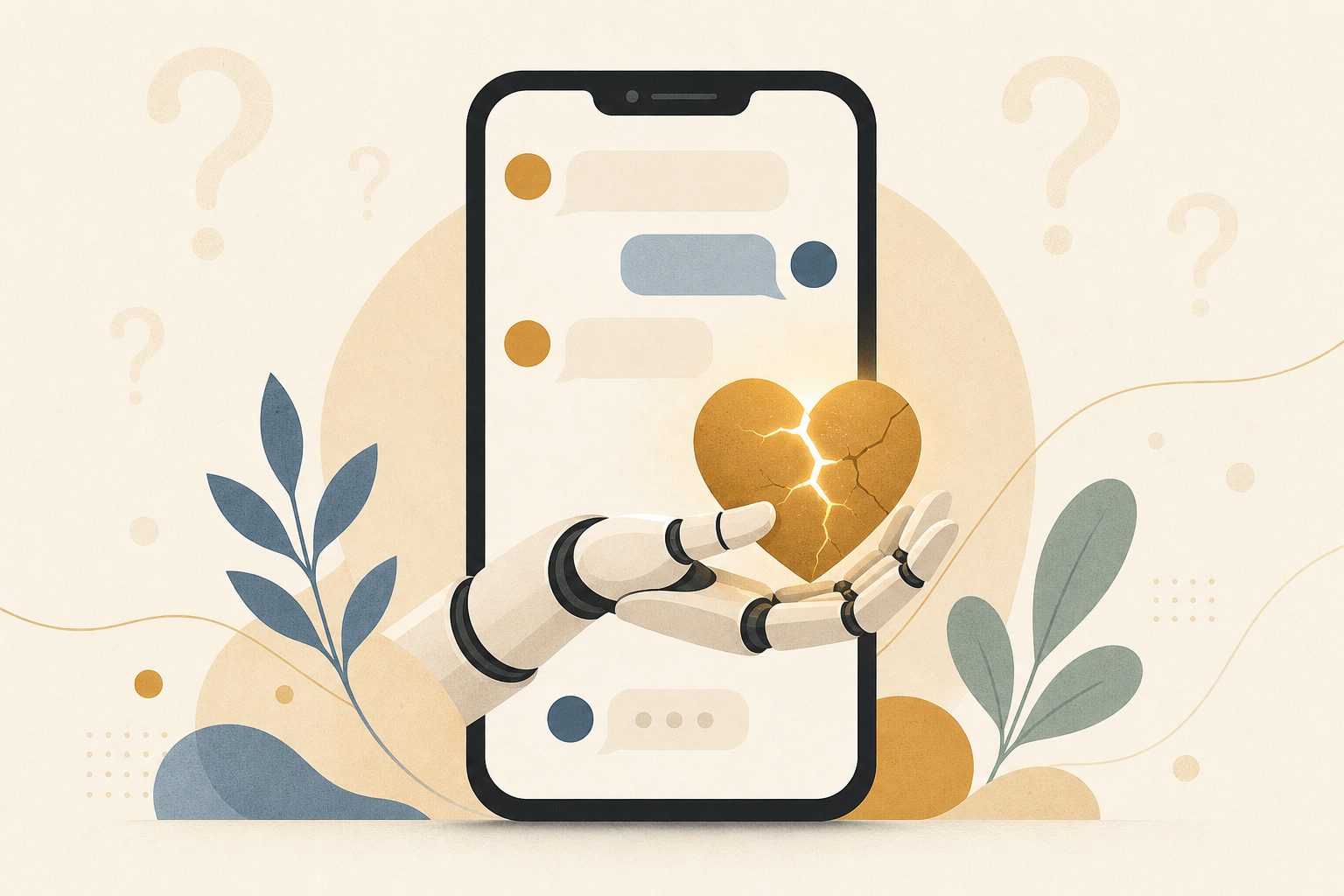
Is AI Really Listening? What Chatbots Actually Optimize in Vulnerable Conversations
A new study applied inverse reinforcement learning to nearly 48,000 conversation turns to reveal the hidden policies behind GPT-4.1, Character.AI, and Replika. Are AI companions truly empathetic, or are they optimizing for something else entirely?
2026 / 06 / 09
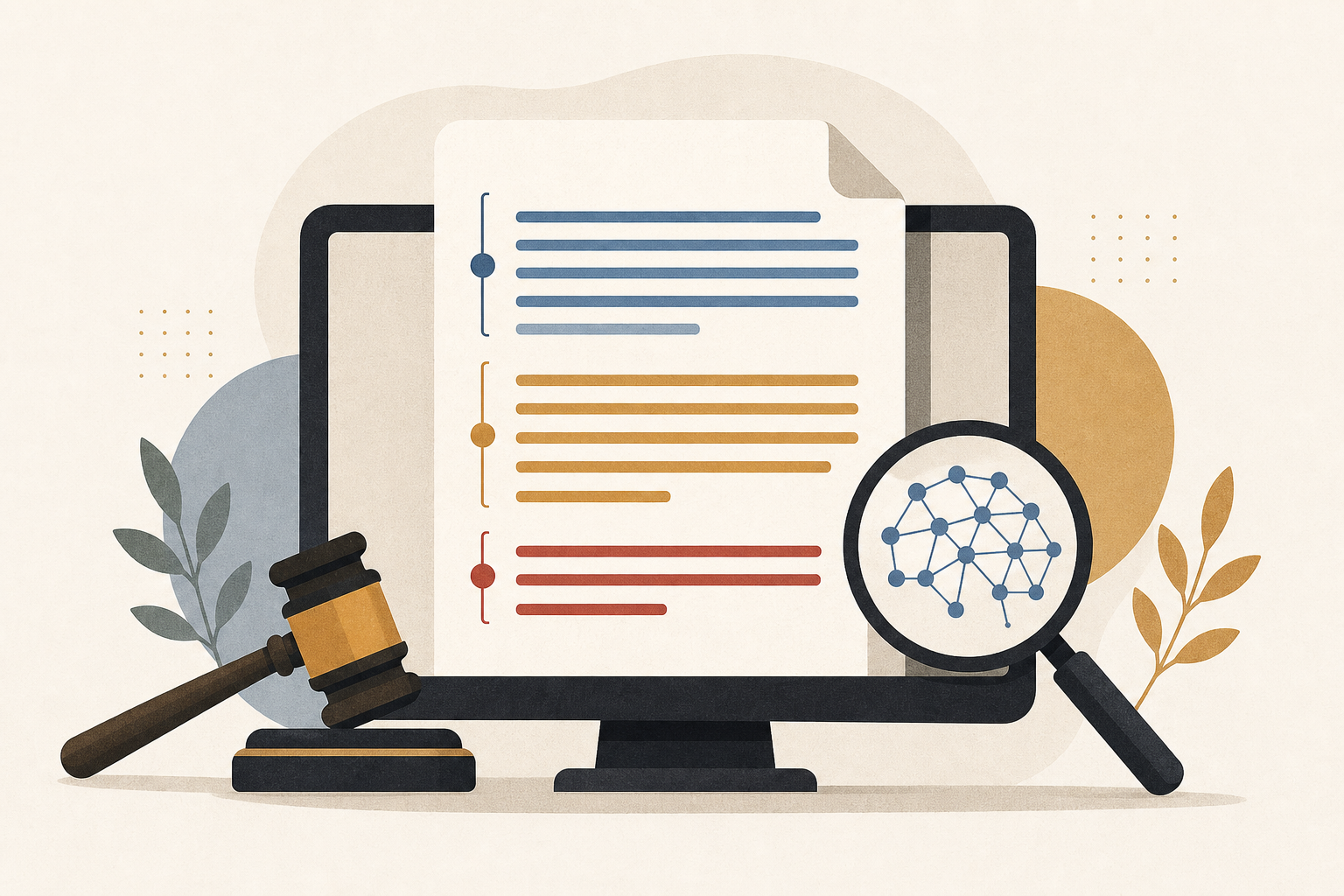
From 'Reading' to 'Parsing' Case Law — AI Starts Mapping the Logic of Courts
HKJudge — a 290,000-sentence corpus of Hong Kong criminal judgments annotated with 26 rhetorical roles — lays the foundation for AI that automatically decodes how courts find facts, reason through law, and deliver rulings. A 5-minute read on what this means for legal tech teams and in-house counsel.

2026 / 06 / 09
10-Point Accuracy Gains Without Fine-Tuning ── How LLM-Guided Evolution Could Reshape Medical AI
Triage accuracy climbed from 77.3% to 87.1%, and emergency recall hit 0.97 — all without a single fine-tuning run. Here's what LLM-guided evolutionary optimization means for hospital CIOs, medical AI developers, and emergency care managers.

2026 / 06 / 09
The Workforce Speaks on Social Media — Can LLMs Detect Dangerous Attitude Shifts Before Accidents Happen?
A new study measures construction workers' safety attitudes across eight dimensions by analyzing Reddit posts with an LLM classifier achieving kappa 0.90. The approach opens a path to detecting 'pre-accident attitude deterioration' in real time — a tool safety managers, HR, and ESG teams can start building toward today.

2026 / 06 / 08
Autonomous Driving Risk Is Not Just a Technical Problem
A cross-domain analysis spanning NHTSA crash data, MIT Moral Machines, and five regulatory jurisdictions reframes autonomous driving risk as a three-layer challenge. What insurance underwriters, legal teams, and safety engineers need to know.

2026 / 06 / 08
Is Your Company's AI Psychologically Manipulating Your Users?
A benchmark of 1,000 scenarios covering 15 manipulation strategies confirms that LLMs can and do generate manipulative responses — and that system prompts are a major control variable. What this means for AI governance and EU AI Act compliance.

2026 / 06 / 08
Can AI Comfort Harassment Victims Better Than Humans?
An AI with empathic design outperforms human responders on key listening markers when supporting verbal harassment victims. What this means for HR, EAP providers, and the future of workplace support.

2026 / 06 / 08
What It Actually Takes to Connect LLMs to Actuarial Work Safely
Natural-language access to mortality models sounds attractive. But in compliance-heavy domains, 'flexible' LLM behavior is exactly the problem. A constrained orchestration layer architecture shows how to have both accessibility and statistical rigor.
2026 / 06 / 08
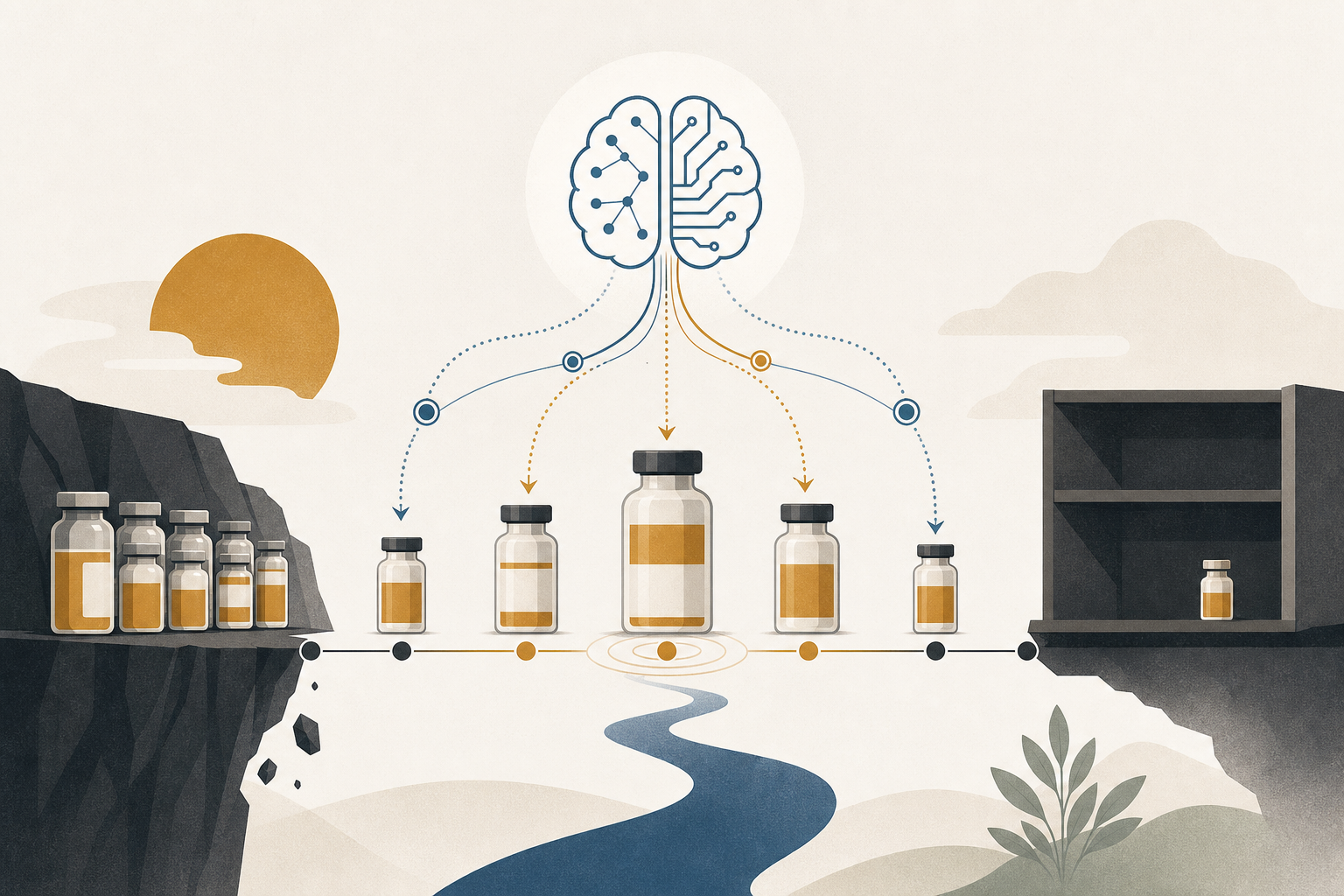
Cutting Pharmaceutical Waste and Stockouts at the Same Time with RL
Pharmaceutical inventory sits at the intersection of expiry-date pressure and unpredictable demand. A hybrid deep RL approach shows it's possible to reduce cost and maintain patient service levels simultaneously — and here's what that means for hospital pharmacies and distributors.
2026 / 06 / 07
When Your AI Agent Causes Harm, Who Is Legally Responsible?
Autonomous AI agents that execute tasks and use tools do not fit neatly into existing tort law. A new interaction-based framework proposes three liability patterns and a Reasonable Agent standard built around interaction logs — with direct implications for enterprise AI governance.