
Column
Building a Digital Clone of an Alzheimer's Patient — Why Transition-Based Modelling Works Even with Sparse Data
Clinical trial design, insurance premium calculation, personalised care planning. A study accepted at AIiH 2026 models Alzheimer's disease progression through individual-level digital twins — and it works even when longitudinal clinical records are sparse and irregular. Here's what it means for pharma, actuarial, and digital health teams.
Hi, I’m Keito Inoshita from Affectosphere Group.
Anyone who works in Alzheimer’s drug development will have encountered these questions repeatedly.
“Where on the cognitive decline curve will this patient be in two years?”
“What patient profile should define the cut-off for trial enrollment?”
“How will this person’s care needs change going forward?”
All of these questions trace back to a single underlying problem: how accurately can we predict disease progression? Alzheimer’s disease is highly heterogeneous — it advances differently in every individual — and clinical data is almost always sparse, captured in one or two annual visits. That sparsity has been the core obstacle to reliable prediction.
A study published on arXiv in June 2026 and accepted at AIiH 2026 (Yinyu Huang, Yilin Zhang, Sofia Michopoulou, Christopher Kipps, Rahman Attar; arXiv:2606.09671) confronts this problem directly. It proposes a transition-based digital twin framework that models Alzheimer’s progression at the individual patient level and remains functional even under sparse, irregular longitudinal data.
Today I’ll break down the research for clinical trial teams at pharmaceutical companies, long-term care actuaries, and digital health investors.
3 Points for Today
- What transition-based modelling is: framing patient state changes as probabilities of movement between discrete stages.
- How the sparse data wall was addressed: handling irregular visit intervals and missing variables.
- Sector-by-sector applications: concrete implications for clinical trials, care insurance, and digital health investment.
① What Is a Transition-Based Digital Twin?
Let’s start with the term “digital twin.”
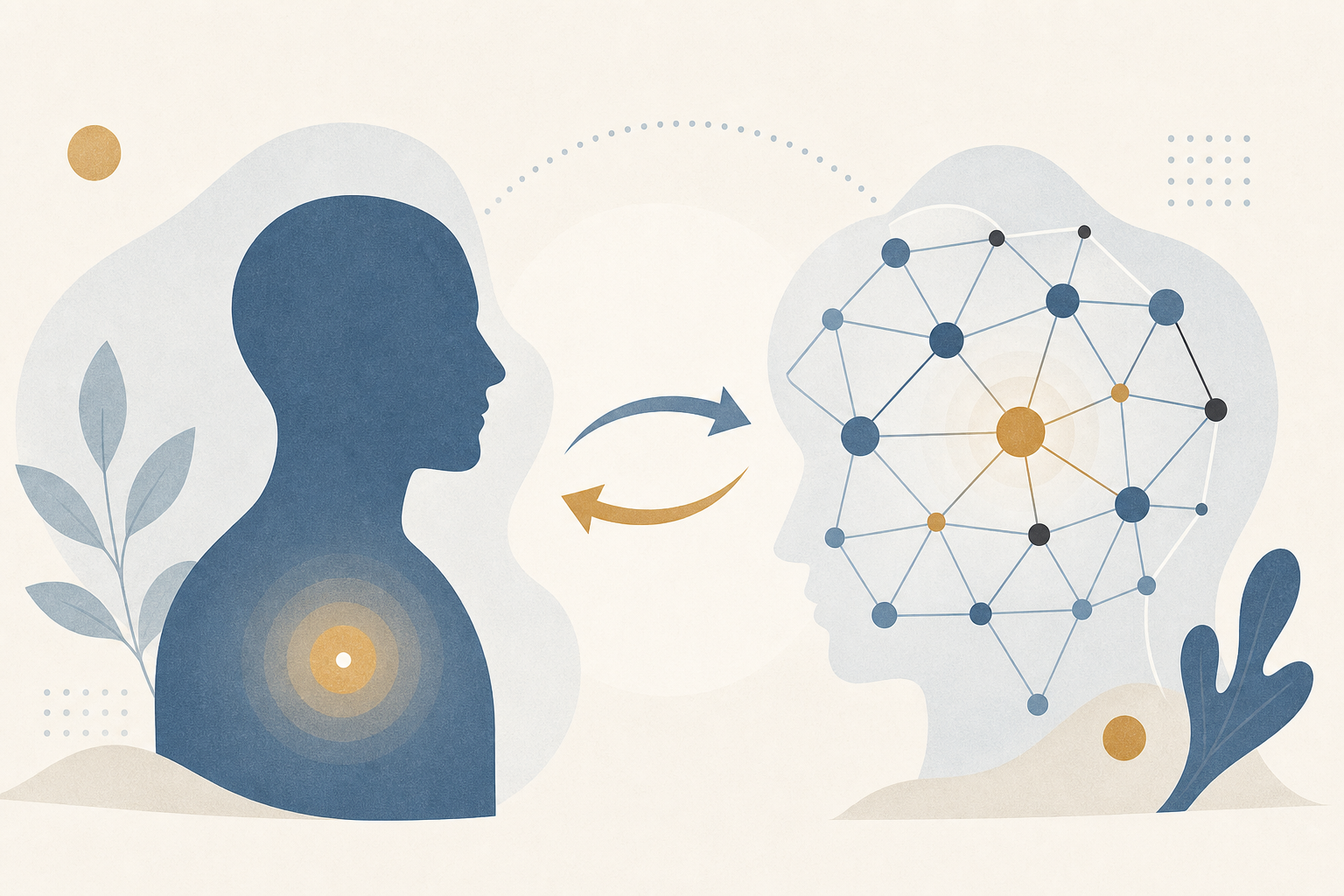
In manufacturing, it refers to a real-time digital mirror of a physical asset. In healthcare, the concept differs. A patient-level digital twin is a model of that individual’s disease trajectory — built from past data — that can simulate future states. Think of it as a “virtual patient.”
The transition-based approach adopted in this study defines cognitive health as a set of discrete stages and models the probability of moving from one stage to another over time. Transitions such as “cognitively normal → mild cognitive impairment (MCI),” “MCI → mild Alzheimer’s,” and “mild → moderate” each receive patient-specific transition probabilities and associated time estimates.
The paper reports that this transition-based approach outperforms sequence-based modelling — which processes the full visit history in one pass — in predictive accuracy. By focusing on the shift between adjacent visits rather than the entire timeline, the model captures local dynamics effectively even when total data volume is limited.
② How the Sparse Longitudinal Data Problem Was Addressed
There are two reasons why Alzheimer’s clinical data is particularly challenging.
The first is irregular visit intervals. Some patients are seen every six months; others every year or every two years. Many time-series models assume equally spaced observations, and irregular intervals degrade their accuracy significantly.
The second is variable missingness. A patient visit may include cognitive assessment scores but no MRI scan. Each variable has its own pattern of presence and absence across the timeline.
The study uses the ADNI (Alzheimer’s Disease Neuroimaging Initiative) dataset — a large multimodal longitudinal cohort spanning cognitive assessments, clinical variables, and MRI-derived neuroimaging phenotypes. ADNI is precisely the kind of dataset known for sparse, irregular structure.
The core design choice is to treat each pair of adjacent visits as the fundamental unit of analysis. Rather than requiring the full patient history to make a prediction, the model estimates transition probabilities from just two time points. This means that even patients with few visits or high rates of missing data can still be modelled without the framework breaking down.
③ Sector-by-Sector Impact
This is where the research becomes most directly relevant to industry practitioners.
Pharmaceutical Companies: Virtual Cohort Simulation for Trial Design
The most expensive part of an Alzheimer’s clinical trial is observing the right patients over the right period.
At the trial design stage, being able to simulate “if we apply this intervention to this patient profile over 18 months, what proportion will reach the target endpoint” increases the precision of sample size estimates before a single patient is enrolled. Building a virtual cohort and comparing projected progression trajectories with and without intervention enables pre-validation of stratification strategies and endpoint selection.
Relevant KPIs: reduction in trial failure rates attributable to incorrect sample sizing, and a decrease in mid-trial protocol amendments. With Phase 2–3 failure costs running into the billions for advanced therapeutics, improvements in design precision translate directly into financial impact.
Relevant teams: clinical statistics and biometrics departments within drug development.
Long-Term Care Actuaries: Individual-Level Transition Modelling for Premium Design
The largest source of uncertainty in long-term care insurance is the distribution of future care level transitions across the insured population. Current practice relies almost entirely on population-level statistical transition tables. Individual-level digital twin models would enable risk estimation at the person level.
Integrating a personalised Alzheimer’s progression model into actuarial calculations creates opportunities across premium design refinement, reserve calculation improvement, and early intervention programme development for high-risk enrollees.
Relevant KPIs: reduction in the gap between projected and actual benefit payouts, and improvement in early identification rates for high-risk policyholders.
Relevant teams: actuarial departments and mathematical modelling units.
Digital Health Investors: Evidence Grounding for Alzheimer’s DTx and Monitoring Products
Investment decisions in Alzheimer’s-focused digital therapeutics (DTx) or home monitoring devices frequently rest on thin evidence about how much a product will slow disease progression.
A virtual patient cohort capable of comparing “progression trajectory with product” versus “without product” provides a rational basis for effect estimation even at early stages when direct clinical evidence is limited. This supports pre-market due diligence and can serve as a grounding document for regulatory submissions to the FDA or PMDA.
Relevant KPIs: accuracy of projected clinical impact for portfolio companies, and quality of evidence documentation in regulatory submissions.
Relevant teams: healthcare investment divisions, digital health and medtech portfolio managers.
Digital Twins and the Shift from Reactive to Anticipatory Alzheimer’s Care
The direction this research points toward is a shift in how we engage with Alzheimer’s disease — from reactive care to pre-emptive simulation.
Current practice moves through a cycle: a patient arrives, their state is assessed, and the next steps are decided. If digital twin models become reliable enough for individual-level use, it becomes possible to project — before the appointment — how a specific patient is likely to change over the next six months, and to prepare resource allocation and family communication accordingly.
Models that function under sparse longitudinal data, as demonstrated in this study, do not require unusually frequent follow-up visits to operate. They could, in principle, be embedded within existing clinical workflows. That integration potential is what makes this research worth following for practitioners across pharma, insurance, and digital health.
Reference
- Yinyu Huang, Yilin Zhang, Sofia Michopoulou, Christopher Kipps, Rahman Attar (2026). Transition-Based Digital Twin Modelling for Alzheimer’s Disease under Sparse Longitudinal Data. AIiH 2026. arXiv:2606.09671.
* This article was written in part with AI assistance and may contain inaccuracies.